

What are the methods for measuring the purity of pure hafnium accurately?
Leave a message

Accurately measuring the purity of pure hafnium is crucial in various industries, especially for suppliers like us. As a trusted pure hafnium supplier, we understand the significance of precise purity measurement, which directly impacts the quality and performance of hafnium products. In this blog, we will explore the methods for measuring the purity of pure hafnium accurately.
Importance of Measuring Hafnium Purity
Hafnium is a lustrous, silvery-gray transition metal with unique physical and chemical properties. It is widely used in nuclear reactors, aerospace, electronics, and other high - tech fields. The purity of hafnium can significantly affect its performance in these applications. For example, in nuclear reactors, even a small amount of impurities can affect the neutron absorption properties of hafnium, which is used as a control rod material. Therefore, accurately measuring the purity of hafnium is essential to ensure the quality and safety of products.
Methods for Measuring Hafnium Purity
1. Spectroscopic Analysis
- Atomic Absorption Spectroscopy (AAS)
Atomic absorption spectroscopy is a widely used technique for measuring the concentration of specific elements in a sample. In the case of hafnium purity measurement, AAS can be used to detect and quantify the presence of impurity elements. The principle of AAS is based on the absorption of light by free atoms in the gaseous state. A sample of hafnium is first atomized, usually by a flame or a graphite furnace. Then, a light source emits light of a specific wavelength corresponding to the absorption line of the impurity element. The amount of light absorbed by the atoms in the sample is proportional to the concentration of the impurity element. By comparing the absorption of the sample with that of standard solutions, the concentration of the impurity can be determined. - Inductively Coupled Plasma - Optical Emission Spectroscopy (ICP - OES)
ICP - OES is another powerful spectroscopic technique for multi - element analysis. It uses an inductively coupled plasma as an excitation source to atomize and excite the sample. When the atoms in the plasma are excited, they emit light at characteristic wavelengths. By measuring the intensity of the emitted light, the concentration of different elements in the hafnium sample can be determined. ICP - OES has several advantages, such as high sensitivity, wide dynamic range, and the ability to analyze multiple elements simultaneously. It can detect a wide range of impurity elements in hafnium with high accuracy. - Inductively Coupled Plasma - Mass Spectrometry (ICP - MS)
ICP - MS combines the high - temperature ionization capabilities of an inductively coupled plasma with the mass - separation and detection capabilities of a mass spectrometer. It is one of the most sensitive and accurate techniques for trace element analysis. In ICP - MS, the hafnium sample is introduced into the plasma, where it is ionized. The ions are then separated according to their mass - to - charge ratio by the mass spectrometer and detected. ICP - MS can detect impurities in hafnium at extremely low levels, down to parts per billion (ppb) or even parts per trillion (ppt). This makes it an ideal method for measuring the purity of high - grade hafnium.
2. Chemical Analysis
- Gravimetric Analysis
Gravimetric analysis is a classical chemical method for determining the amount of a substance by measuring its mass. In the context of hafnium purity measurement, gravimetric analysis can be used to separate and quantify certain impurity elements. For example, a hafnium sample can be dissolved in an appropriate acid, and then a specific reagent is added to precipitate the impurity element. The precipitate is then filtered, washed, and dried, and its mass is measured. By comparing the mass of the precipitate with the known stoichiometry of the reaction, the amount of the impurity element in the hafnium sample can be calculated. However, gravimetric analysis is time - consuming and requires careful handling to ensure accurate results. - Titration
Titration is a volumetric analysis method that involves the addition of a reagent of known concentration (titrant) to a sample solution until the reaction between the titrant and the analyte (impurity element in this case) is complete. The endpoint of the titration is usually detected by a color change or other physical or chemical indicators. Titration can be used to determine the concentration of certain impurity elements in hafnium, such as acid - base titration for measuring the content of acidic or basic impurities. Although titration is a relatively simple and inexpensive method, it may have limitations in terms of sensitivity and accuracy for trace impurity analysis.
3. Physical Property Measurement
- Density Measurement
The density of a substance is related to its composition. Pure hafnium has a well - defined density. By measuring the density of a hafnium sample and comparing it with the theoretical density of pure hafnium, an indication of the sample's purity can be obtained. However, density measurement is not very specific for identifying individual impurity elements. It can only provide a general assessment of the overall purity of the hafnium sample. Small deviations in density may be caused by the presence of impurities, but other factors such as porosity or crystal structure can also affect the density. - Electrical Conductivity Measurement
The electrical conductivity of hafnium is also influenced by its purity. Impurities in hafnium can scatter electrons, reducing its electrical conductivity. By measuring the electrical conductivity of a hafnium sample and comparing it with the known conductivity of pure hafnium, the purity of the sample can be estimated. However, like density measurement, electrical conductivity measurement is not specific for identifying individual impurities. It is more of an indirect method for assessing the overall purity of the hafnium.
Our Commitment to Purity Measurement
As a pure hafnium supplier, we are committed to providing high - quality hafnium products with accurate purity. We use a combination of the above - mentioned methods to measure the purity of our hafnium products. Our state - of - the - art laboratories are equipped with advanced spectroscopic and chemical analysis instruments, such as ICP - MS and AAS, to ensure the highest level of accuracy in purity measurement.
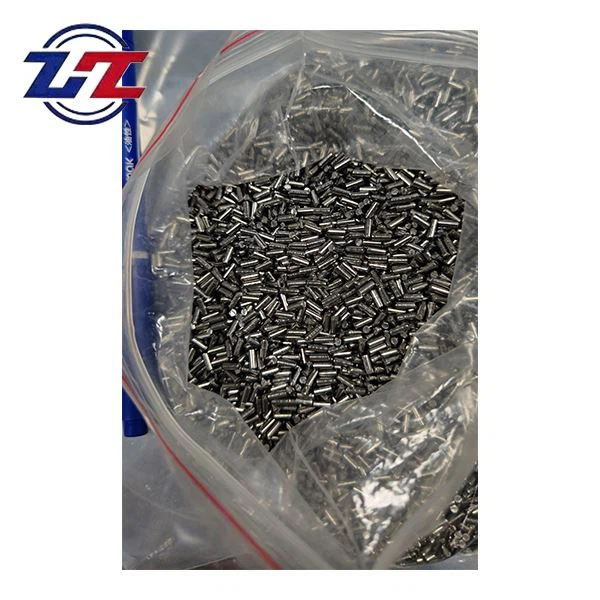
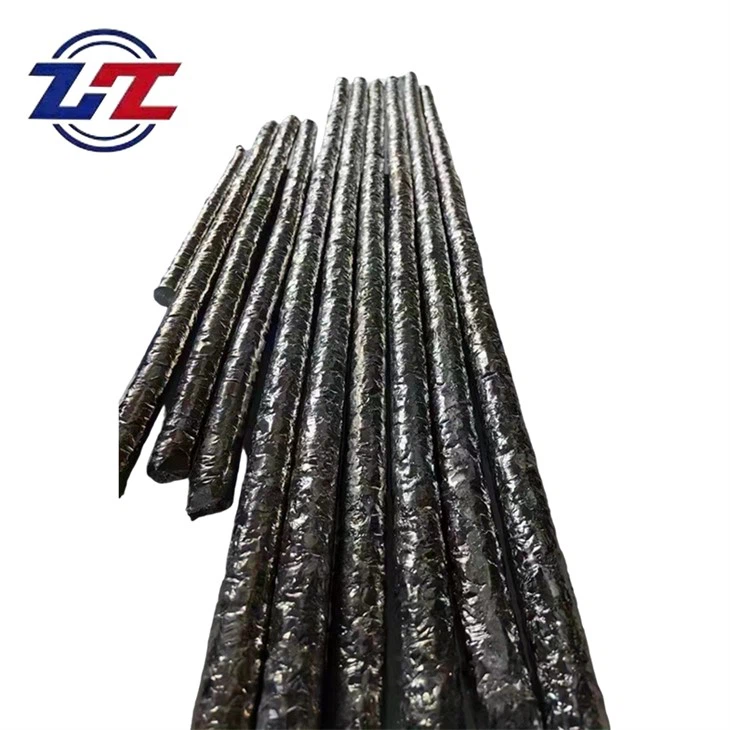
We offer a wide range of pure hafnium products, including Hafnium Rod and Hafnium Particles. Our products are carefully tested and certified to meet the strict purity requirements of our customers. Whether you need hafnium for nuclear applications, aerospace components, or electronic devices, you can trust our products to have the desired purity and quality.
Contact Us for Procurement
If you are interested in purchasing high - purity hafnium products, we invite you to contact us for procurement. Our experienced sales team is ready to provide you with detailed product information, technical support, and competitive pricing. We understand the specific needs of different industries and can work with you to find the most suitable hafnium products for your applications.
References
- Ebdon, L., Evans, E. H., & Ward, S. A. (1998). Analytical atomic spectrometry with inductively coupled plasmas. Wiley.
- Skoog, D. A., West, D. M., Holler, F. J., & Crouch, S. R. (2013). Fundamentals of analytical chemistry. Cengage Learning.
- Harris, D. C. (2015). Quantitative chemical analysis. W. H. Freeman.

