

Your Leading Hafnium Particles Supplier
Shaanxi Zhongheng Weichuang Metal Materials Co., Ltd. specializes in the export of metal materials. From smelting to export, we strive for excellence. The company mainly engages in the production of conventional processed profiles such as plates, strips, foils, rods, wires, and tubes made of tantalum, niobium, hafnium, tantalum tungsten alloy, niobium hafnium alloy c103. Hafnium particles are important materials for manufacturing control rods in nuclear reactors. In the aerospace field, hafnium particles are often used as additives in alloys.


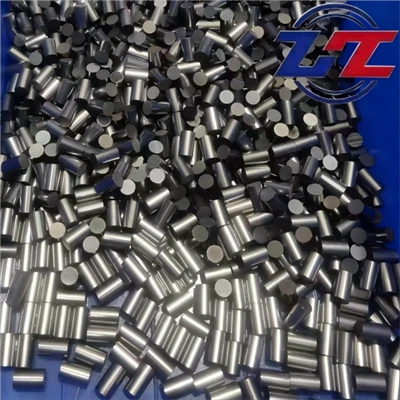

Why Choose Us?
Professional Team
The company has many years of experience in technology and a high-quality work team, which can provide customers with timely and comprehensive service.
Quality Assurance
We maintain strict control over every stage, from raw material smelting to finished product export, to ensure the selection of high-quality metal materials and to meet the highest standards at every step.
Production Market
Our non-ferrous metals, such as tantalum, niobium, and titanium, are primarily exported to North America, Europe, and Asia.
Wide Range of Applications
Our products are widely used in a variety of fields, including electronics, metallurgy, chemicals, aerospace, biomedical engineering, and superconductivity, etc.
Parameters of Hafnium Particles
|
Product Name |
Hafnium Particles |
|
Condition |
Vacuum annealed |
|
Standard |
ASTM B393-05 |
|
Technics |
Cold rolled |
|
Size |
Thickness:0.025mm min; |
|
Width:3mm min; |
|
|
Length according to your request. |
|
|
Density |
8.57g/cm3 |
|
Application |
Industry |
Characteristics of Hafnium Particles
Enhanced Durability and Corrosion Resistance:
Hafnium coatings provide a robust barrier against wear and corrosion, significantly extending the life of the coated products.
Improved Performance in High-Temperature Environments:
With their high melting point and thermal stability, hafnium coatings maintain their integrity under extreme heat, making them ideal for aerospace and industrial applications.
Superior Adhesion and Coverage:
Hafnium particles create a uniform and adherent layer, ensuring complete coverage and effective protection of the underlying substrate.

Physical properties of Hafnium Particles
|
Property |
Value |
Description |
|
Atomic Number |
72 |
Indicates the number of protons in the nucleus |
|
Atomic Weight |
~178.49 u |
Represents the average mass of hafnium atoms |
|
Melting Point |
2233 °C |
Temperature at which hafnium transitions from solid to liquid |
|
Boiling Point |
4602 °C |
Temperature at which hafnium transitions from liquid to gas |
|
Density |
13.31 g/cm³ |
Measurement of mass per unit volume in solid form |
Applications of Hafnium Particles
Applications of Hafnium Particles
1
>>
In superalloys
2
>>
As the electrode in plasma cutting
3
>>
In gas-filled and incandescent lamps
4
>>
In vacuum tubes as a getter
5
>>
In control rods in nuclear power plants
6
Precautions for Processing Hafnium Particles
Care should be taken when machining the hafnium metal because it is pyrophoric, and the fine particles can combust spontaneously when exposed to the air. Many people rarely encounter compounds that contain hafnium. This pure metal is not considered to be toxic. However, hafnium compounds should be handled carefully as if they were toxic. The metal's ionic forms are usually at the greatest risk for toxicity, and limited animal testing has been done for these compounds.
People can be exposed to the workplace's hafnium element by swallowing, breathing, eye contact, and skin contact. And, the Occupational Safety & Health Administration - OSHA, has set the legal limit (which is the Permissible exposure limit) for exposure to hafnium and its compounds in the workplace with TWA 0.5 mg/m³ up to an 8-hour workday. Also, the National Institute for Occupational Safety & Health - NIOSH has also set the same REL (Recommended Exposure Limit) at 50 mg/m³ levels; hafnium is immediately dangerous to health and life.
Certificate


Keep particles away from all ignition sources including heat, sparks, and flame.
Prevent dust accumulations to minimise combustible dust hazard. Eating
Packaging of Hafnium Particles
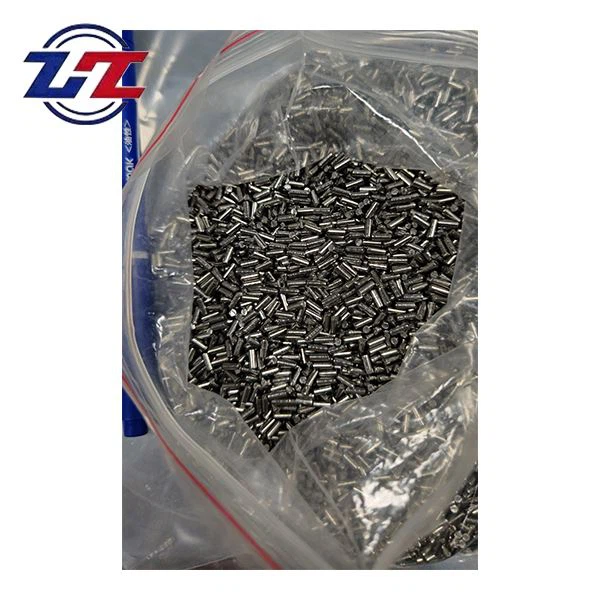
We take care to protect metal products during packaging, storage, and transportation. Packaging methods are selected according to the product’s shape, dimensions, surface condition, and shipping requirements.
Depending on the product type, suitable protective materials and inner packaging can be used to help reduce the risk of scratches, surface damage, and movement during transit. Outer packaging is selected to provide appropriate protection during handling and transportation.
Before shipment, product specifications, quantities, labels, and packaging details can be checked against the order requirements. Our goal is to help ensure that metal materials are properly protected, clearly identified, and prepared for delivery.
For customized packaging requirements, please contact us before placing your order so that the details can be confirmed in advance.


Shipping & Payment
|
Shipping: |
By logistics; by automobile; by train; by shipping; by air. |
|
Payment: |
L/C; T/T; Paypal; West Union; MoneyGram etc; |
FAQ
Shaanxi Zhongheng Weichuang Metal Materials Co., Ltd. is one of the most professional hafnium particles manufacturers and suppliers in China, specialized in providing high quality customized service. We warmly welcome you to buy hafnium particles for sale here and get pricelist from our factory. For price consultation, contact us.
hafnium alloy foil, hafnium alloy tube, hafnium alloy strip