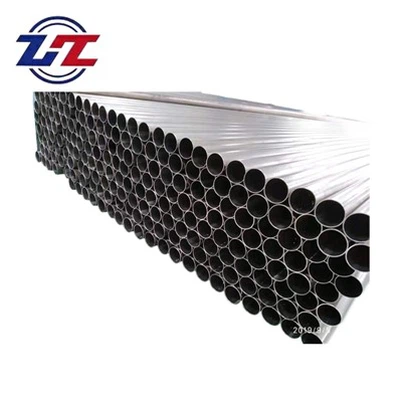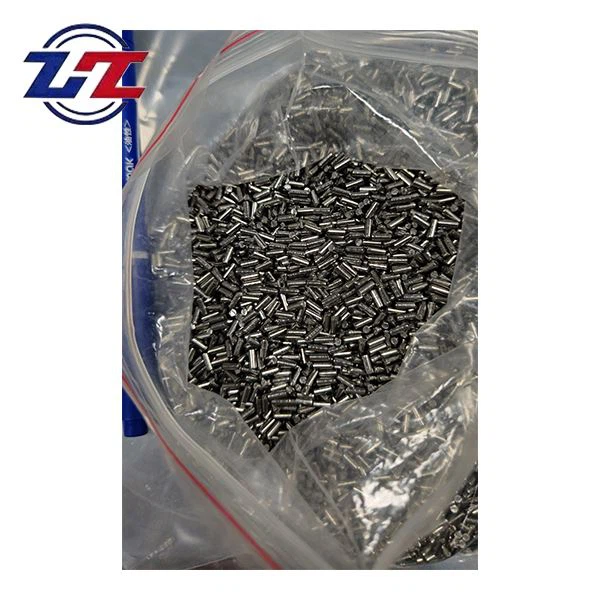
Hafnium Particles
Hafnium particles refer to granular materials made of hafnium metal, which have various excellent properties such as high temperature resistance, corrosion resistance, oxidation resistance, and easy processing. They are often used as additives in alloys.
Description
Shaanxi Zhongheng Weichuang Metal Materials Co., Ltd. is one of the leading manufacturers and suppliers of hafnium particles in China. We are committed to providing high quality customized products with competitive price. Please feel free to buy durable hafnium particles for sale here from our factory. Also, quotation is available.
Hafnium particles are important materials for manufacturing control rods in nuclear reactors. Due to its large thermal neutron capture cross section, hafnium can effectively absorb neutrons, thereby controlling the rate and intensity of nuclear reactions. This makes hafnium particles play a crucial role in the safe operation of nuclear reactors. In the aerospace field, hafnium particles are often used as additives in alloys. By adding hafnium element, the high temperature resistance, corrosion resistance, and strength of the alloy can be significantly improved. For example, alloys containing hafnium can be used to manufacture structural materials for jet engines and missiles, such as turbine blades.

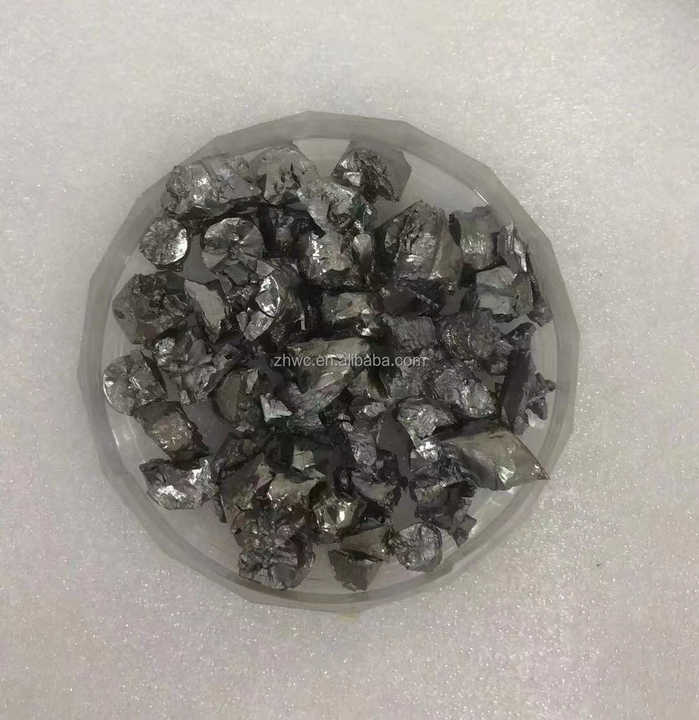
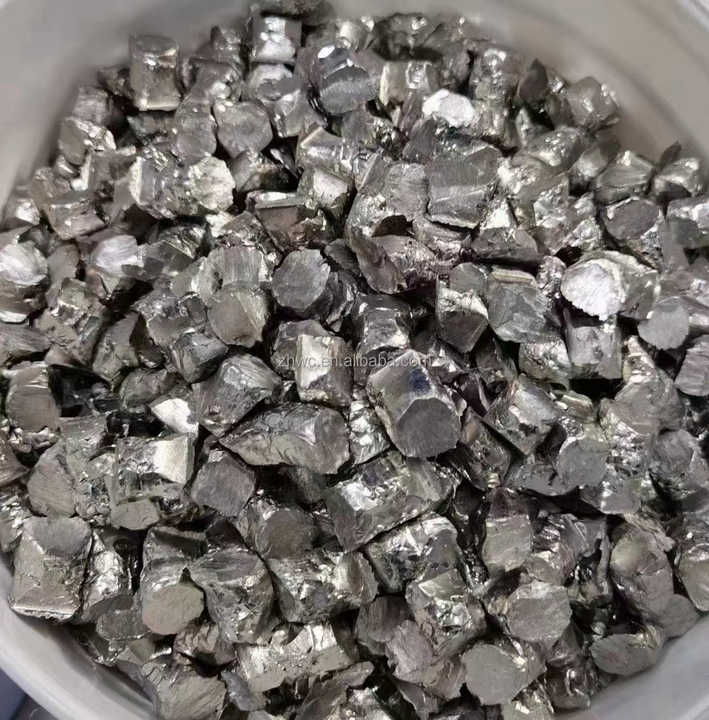
Hafnium particles can also be used as evaporative coating materials. Heating hafnium particles under vacuum conditions to evaporate and deposit on the surface of the substrate can form a uniform and dense hafnium film. This coating technology has important applications in electronic device manufacturing. Hafnium particles also have important applications in the electronics industry. Due to their easy emission of electrons, hafnium wires are often used to manufacture cathodes for X-ray tubes. This type of X-ray tube has a wide range of applications in medical, scientific research, and other fields.
There are significant differences between hafnium particles and tantalum particles in terms of physical properties, chemical properties, and application fields. Hafnium has relatively weak acid resistance, but it can resist the corrosion of strong acids such as concentrated hydrochloric acid, concentrated nitric acid, and cold aqua regia. Tantalum is known for its extremely high inertness towards acids and its ability to withstand corrosion from various strong acids. However, tantalum has poor alkali resistance, and molten strong alkali can corrode tantalum violently with a slight heating. Hafnium is the king of alkali resistance, able to resist the corrosion of molten strong alkali. Due to the fact that hafnium and tantalum are both rare metals and the extraction and processing processes are relatively complex, their costs are relatively high.
The main difference between hafnium particles and tantalum particles in terms of their applications lies in their unique physical and chemical properties that determine their respective fields of application. Hafnium particles are more focused on applications in fields such as atomic energy, alloys, and electronic materials, while tantalum particles are more widely used in fields such as chemical engineering, electronics, aerospace, and hard alloy manufacturing.
The preparation of hafnium particles involves multiple methods, and the choice of these methods depends on the required purity, morphology, and application scenarios of the hafnium particles. The common method is magnesium reduction, which uses metal magnesium to reduce hafnium tetrachloride (HfCl4) to prepare hafnium metal. This is one of the commonly used industrial preparation methods, which can obtain high-purity hafnium metal. There is also an electrolysis method using HfCl4 and K2HfF6 as raw materials, which has a process similar to the electrolysis of zirconium and is suitable for large-scale production. Ion exchange method is to extract hafnium oxide from minerals or waste containing hafnium through ion exchange resin, and further reduce it to metallic hafnium. This method is suitable for extracting hafnium from complex minerals and can effectively separate and purify it.
Generally speaking, high-purity hafnium particles have better performance and a wider range of applications. Common specifications of hafnium particles include particles of different diameters, blocks, or powders. Specific specifications and purity requirements can be customized according to customer needs.
Hot Tags: hafnium particles, China hafnium particles manufacturers, suppliers, factory, hafnium alloy strip, hafnium alloy tube, hafnium alloy foil
Send Inquiry
You Might Also Like