Hafnium Rod
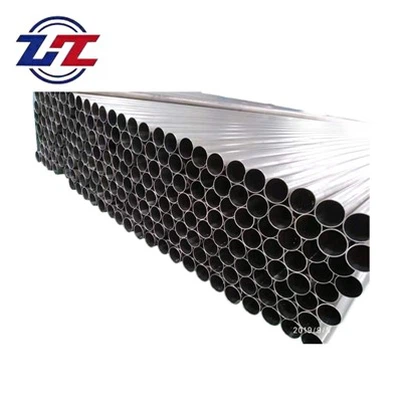
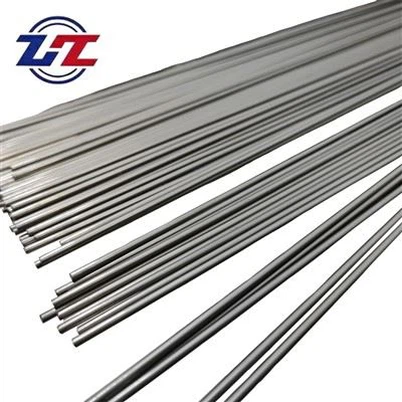
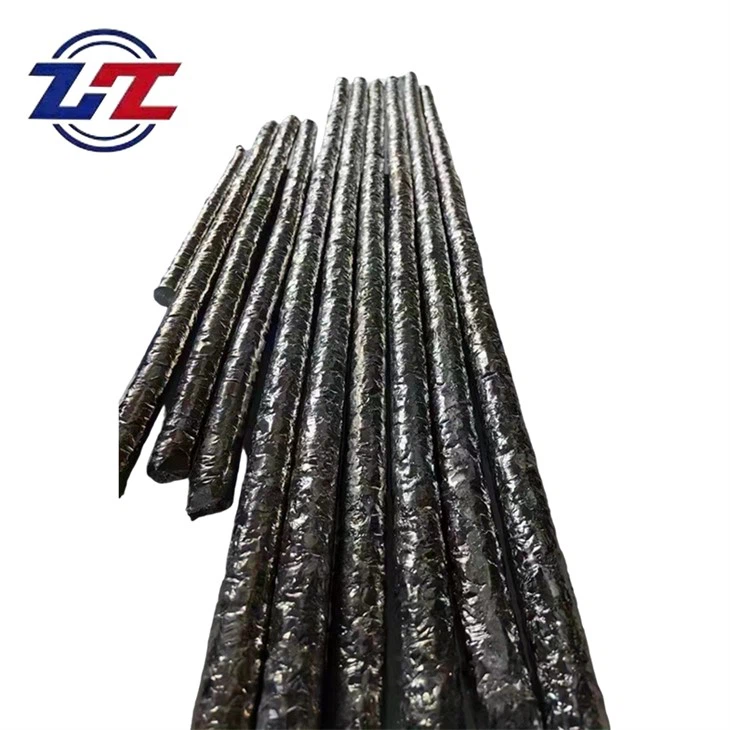
Hafnium rod is a rod-shaped metal material made of hafnium element, which has high melting point, high density, corrosion resistance, reactivity and other characteristics. It is widely used in nuclear industry, aerospace, industrial manufacturing, electronics industry and other fields.
Description
Shaanxi Zhongheng Weichuang Metal Materials Co., Ltd. supplies high-quality hafnium metal rods with a purity of up to 99.95%, and can customize specifications according to demand. Hafnium rod is a silver gray metal with a metallic luster and a high density of about 13.31 grams per cubic centimeter. This makes hafnium rod have a high mass at the same volume and suitable for applications that require high-density materials. The melting point of hafnium is extremely high, which allows hafnium rods to maintain stable performance in high temperature environments and is not easily melted or deformed.


Hafnium rods have good corrosion resistance and are not easily corroded by general acidic and alkaline aqueous solutions. This characteristic makes hafnium rods have broad application prospects in the chemical industry and other corrosive environments. Hafnium can directly combine with gases such as oxygen and nitrogen at high temperatures to form oxides and nitrides. However, at room temperature, hafnium rods are relatively stable and not easily reactive with other substances. Hafnium rods are insoluble in dilute hydrochloric acid, dilute sulfuric acid, and strong alkaline solutions, but are easily soluble in hydrofluoric acid and aqua regia. This solubility characteristic makes hafnium rods have unique application value in specific chemical reactions.
Hafnium rods have plasticity in a pure state, but they become hard and brittle when impurities are present. This characteristic requires attention to its purity and impurity content when using hafnium rods to avoid affecting the mechanical properties of the material. Hafnium has a high neutron absorption cross section and is an ideal neutron absorber. Therefore, it is often used as a control rod in nuclear reactors to slow down the rate of nuclear chain reactions and suppress the "flame" of atomic reactions. In nuclear reactors, hafnium rods can also be used as other critical components, such as protective devices, to ensure the safe operation of the nuclear reactor.
Hafnium rods can be used as alloy additives for aviation and aerospace materials to improve their high temperature resistance, corrosion resistance, and other properties, meeting the needs of extreme environments. Due to its rapid heat absorption and release properties, as well as outstanding refractory properties, hafnium can be used as a structural material for jet engines and missiles, such as blades for turbojet aircraft.
Adding hafnium element to alloys such as tungsten, molybdenum, and tantalum can produce hard alloys and heat-resistant alloys, which have wide applications in cutting tools, high-temperature components, and other fields. Hafnium can also be used as a suction agent in many inflation systems to remove unwanted gases such as oxygen and nitrogen present in the system. Hafnium rods are also used for vacuum sputtering coating, as target materials for flat panel displays, decorative coatings, tool and mold coatings, glass coatings, electronic device coatings, magnetic memory coatings, semiconductor coatings, and solar cell coatings. In the electronics industry, hafnium rods are used to manufacture cathodes for X-ray tubes.
Hafnium rods are highly regarded for their unique physical, chemical, and mechanical properties, as well as their wide range of applications. But at the same time, the cost is relatively higher compared to tantalum and niobium, and can be selected according to specific application scenarios and budgets.
Hot Tags: hafnium rod, China hafnium rod manufacturers, suppliers, factory, hafnium 72, hafnium alloy sheet, hafnium iron alloy, hafnium ore lumps, hafnium ore powder, hafnium price per kg
Send Inquiry
You Might Also Like