Hafnium Particles For Chemical Equipment
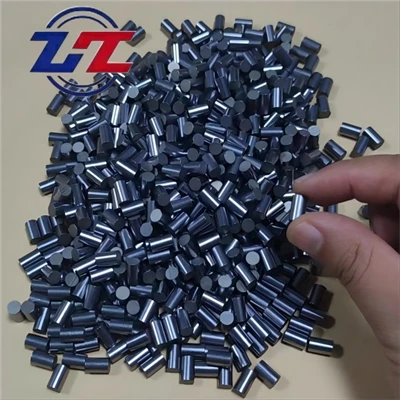
Hafnium particles used in chemical equipment are granular materials made from high-purity metal hafnium (usually ≥ 99.9%) through processes such as hydrogenation dehydrogenation (HDH) or plasma atomization (PA). Its core value lies in excellent corrosion resistance, high purity characteristics, and high-temperature stability, making it a key material for dealing with extreme chemical environments such as strong acids and high temperatures.
Description
Hafnium particles used in chemical equipment need to have excellent corrosion resistance and extremely high purity. It must have excellent resistance to strong acids such as nitric acid, hydrochloric acid, sulfuric acid, and high-temperature steam, with an annual corrosion rate of less than 0.01 millimeters. At the same time, the content of impurities such as iron, nickel, and chloride ions (single<50ppm) must be strictly controlled to avoid catalytic poisoning or reaction medium pollution, ensuring the purity and continuity of the chemical process.
Secondly, the particles need to have stable high-temperature performance and customizable physical morphology. It can maintain structural stability in an acidic environment of 300-600 ° C, without intergranular corrosion tendency, and adapt to different processes such as thermal spraying and sintering through controllable particle size (1-150 μ m), morphology (irregular or spherical), and particle size distribution, meeting the processing and functional requirements of diverse application scenarios such as reactor liners, electrode materials, and filter elements.
Core process
The production process is a precision process that integrates high-purity metallurgy, powder preparation, and post-treatment, aiming to obtain hafnium particle products with excellent corrosion resistance and controllable composition and morphology.


1, Preparation of high-purity hafnium raw materials
Separation and purification of hafnium zirconium:
Using extraction separation techniques (such as MIBK thiocyanate system), high-purity hafnium compounds (such as HfCl ₄) are separated from zirconium hafnium co occurring ores.
Reduction melting:
By using the Kroll process or electron beam melting (EBM), hafnium compounds are reduced and melted into ingots, with strict control of impurities such as oxygen (O<600 ppm) and nitrogen (N<100 ppm) to ensure substrate purity of ≥ 99.9%.
2, Powder forming process
Hydrogenation dehydrogenation (HDH) method (mainstream process):
Hydrogenation: Treat the neodymium ingot in a hydrogen atmosphere at 500-800 ° C to induce hydrogen embrittlement.
Crushing and grinding: Mechanical crushing to the target particle size range under a protective atmosphere.
Dehydrogenation: Dehydrogenation is carried out in high vacuum at 800-1000 ° C to obtain irregularly shaped hafnium particles with high specific surface area.
Plasma atomization (PA) method (high-performance requirement):
Melt high-purity hafnium electrode rods into liquid droplets through plasma arc in an inert atmosphere.
Droplets cool into highly spherical particles during flight, with good fluidity and low oxygen content, but at a higher cost.
3, Post processing and grading
Screening and Grading:
By using vibration screening and airflow classification technology, the powder is accurately classified into the required particle size range (such as 1-45 μ m, 45-150 μ m).
Surface Treatment
Acid washing: Use a mixed acid (such as HF-HNO ∝) to clean surface oxides and contaminants.
Passivation treatment: Form a dense oxide film to further enhance corrosion resistance.
Performance testing:
Composition analysis: GDMS detects purity and impurity content.
Performance testing: Conduct corrosion tests (such as soaking in 70% nitric acid), particle size distribution and flowability tests.
4, Packaging and Storage
Packaging should be done in an inert atmosphere (such as argon) or vacuum environment to prevent oxidation and moisture absorption during transportation and storage.
Label with information such as particle size, purity, batch number, etc. to ensure traceability and safe use.
Hafnium particles used in chemical equipment have solved the problems of material corrosion and pollution in strong acid, high temperature, and high-purity environments through high-purity control, morphology design, and surface optimization. Its application significantly extends the service life of chemical equipment, improves process stability and product purity, and is an indispensable strategic material for high-end chemical equipment.
Hot Tags: hafnium particles for chemical equipment, China hafnium particles for chemical equipment manufacturers, suppliers, factory, hafnium alloy tube, hafnium alloy foil, hafnium alloy strip
Send Inquiry
You Might Also Like