

What are the purification methods for hafnium to obtain pure hafnium?
Leave a message

As a reputable supplier of pure hafnium, I am often asked about the purification methods used to obtain this highly sought-after element. Hafnium, with its unique properties such as high melting point, corrosion resistance, and neutron absorption capabilities, has a wide range of applications in industries like aerospace, electronics, and nuclear energy. In this blog, I will delve into the various purification methods employed to produce pure hafnium and highlight the quality of our products.
Why Purify Hafnium?
Hafnium is typically found in zirconium ores, and the two elements have very similar chemical properties. This makes it challenging to separate hafnium from zirconium and other impurities. Impurities in hafnium can significantly affect its performance in applications. For instance, in nuclear reactors, even small amounts of impurities can alter the neutron absorption characteristics of hafnium, which is crucial for reactor control. Therefore, purification is essential to obtain hafnium with the desired purity levels for specific applications.
Purification Methods
1. Chlorination and Distillation
The chlorination and distillation process is one of the most common methods for purifying hafnium. In this process, the hafnium-containing ore is first reacted with chlorine gas at high temperatures. This forms hafnium tetrachloride (HfCl₄) and zirconium tetrachloride (ZrCl₄), along with other metal chlorides.
The reaction can be represented as follows:
HfO₂ + 2C + 2Cl₂ → HfCl₄ + 2CO
ZrO₂ + 2C + 2Cl₂ → ZrCl₄ + 2CO
Since hafnium tetrachloride and zirconium tetrachloride have different boiling points (HfCl₄ boils at around 319°C and ZrCl₄ at 331°C), they can be separated by fractional distillation. This process allows for the separation of hafnium from zirconium and other impurities to a certain extent. However, further purification steps are often required to achieve high-purity hafnium.
2. Solvent Extraction
Solvent extraction is another important method for purifying hafnium. In this process, a suitable organic solvent is used to selectively extract hafnium from a solution containing hafnium and zirconium. The choice of solvent and extraction conditions is crucial for the efficiency of the separation.
One commonly used solvent is tributyl phosphate (TBP). The extraction process involves contacting the aqueous solution of hafnium and zirconium chlorides with the organic solvent. Hafnium preferentially partitions into the organic phase, while zirconium remains in the aqueous phase. The hafnium-rich organic phase is then separated and further processed to obtain pure hafnium compounds.
3. Iodide Process
The iodide process, also known as the van Arkel - de Boer process, is a high - purity purification method. In this process, impure hafnium is heated with iodine in a sealed container at a relatively low temperature. The hafnium reacts with iodine to form hafnium tetraiodide (HfI₄).
Hf + 2I₂ → HfI₄
The hafnium tetraiodide vapor is then decomposed on a hot filament (usually made of tungsten) at a higher temperature. The pure hafnium is deposited on the filament, while the iodine is released and can be recycled. This process can produce hafnium with extremely high purity, often exceeding 99.9%.
Our Pure Hafnium Products
At our company, we use a combination of these purification methods to ensure the highest quality of our pure hafnium products. We offer a wide range of pure hafnium products, including Hafnium Particles and Hafnium Rod.
Our hafnium particles are available in various sizes and purities, making them suitable for applications such as powder metallurgy, thin - film deposition, and alloy production. The particles have a uniform size distribution and high purity, which ensures consistent performance in different applications.
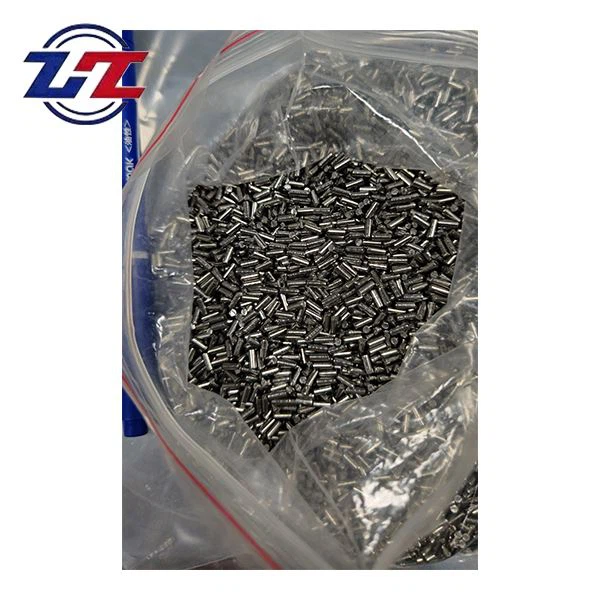
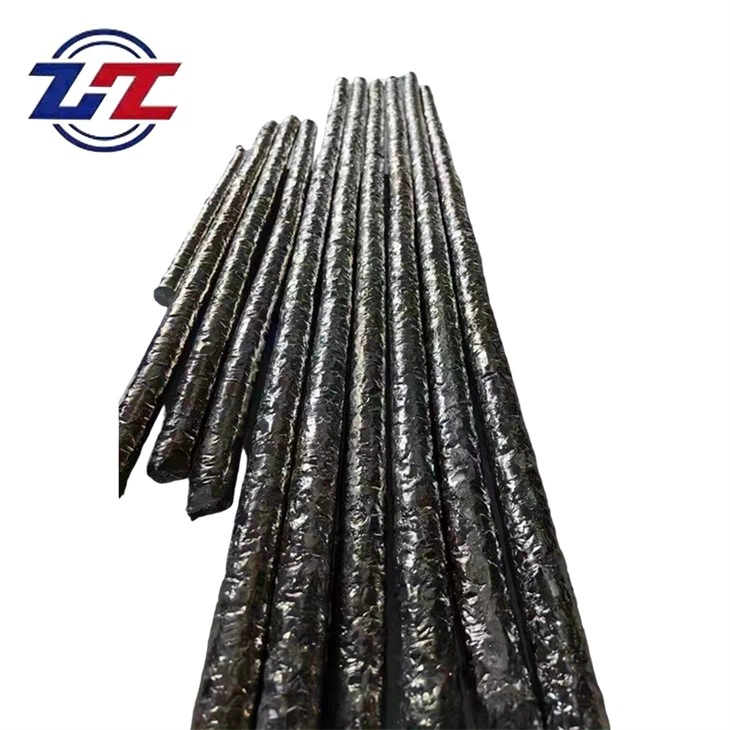
Our hafnium rods are precision - manufactured to meet the strict requirements of industries like aerospace and electronics. They are made from high - purity hafnium and have excellent mechanical and physical properties. The rods can be customized in terms of diameter, length, and surface finish to meet the specific needs of our customers.
Quality Control
We have a strict quality control system in place to ensure the purity and quality of our hafnium products. Every batch of hafnium undergoes rigorous testing using advanced analytical techniques such as inductively coupled plasma mass spectrometry (ICP - MS) and X - ray fluorescence (XRF). These techniques allow us to accurately determine the purity of hafnium and detect any trace impurities.
In addition to chemical analysis, we also perform physical and mechanical property tests on our products. This includes tests for density, hardness, and tensile strength. Only products that meet our strict quality standards are released to the market.
Applications of Pure Hafnium
Pure hafnium has a wide range of applications in different industries:
Aerospace Industry
In the aerospace industry, hafnium is used in turbine engines due to its high melting point and excellent mechanical properties at high temperatures. It can be used as an alloying element in superalloys to improve their strength and creep resistance. Hafnium - based alloys are also used in rocket nozzles and other high - temperature components.
Electronics Industry
In the electronics industry, hafnium dioxide (HfO₂) is used as a high - k dielectric material in semiconductor devices. It can replace silicon dioxide in transistors, which allows for the development of smaller and more efficient electronic devices. Hafnium is also used in the production of cathode ray tubes and vacuum tubes.
Nuclear Industry
In the nuclear industry, hafnium is used as a control rod material in nuclear reactors. Its high neutron absorption cross - section makes it an ideal material for regulating the nuclear reaction. Hafnium can effectively absorb neutrons and prevent the reactor from overheating.
Contact Us for Purchase and Consultation
If you are interested in purchasing pure hafnium products or have any questions about our purification methods and product quality, please feel free to contact us. We have a team of experienced professionals who can provide you with detailed information and technical support. Whether you need a small quantity for research purposes or a large volume for industrial production, we can meet your requirements.
References
- Emsley, J. (2011). Nature's Building Blocks: An A-Z Guide to the Elements. Oxford University Press.
- Kirk - Othmer Encyclopedia of Chemical Technology. Wiley.
- Handbook of Preparative Inorganic Chemistry, 2nd ed., edited by G. Brauer, Academic Press, 1963.

