

What is the creep rate of niobium plate at high temperatures?
Leave a message

Hey there! As a supplier of Niobium Plates, I often get asked about the creep rate of niobium plates at high temperatures. It's a super important topic, especially for industries that rely on high - performance materials like niobium in extreme conditions. So, let's dig into it!
First off, what's creep? Creep is the slow and continuous deformation of a material under a constant load over time, especially at high temperatures. In simpler terms, when you put a material under stress and heat it up for a long time, it starts to change shape gradually. And this can be a big deal in applications where precision and stability are key.
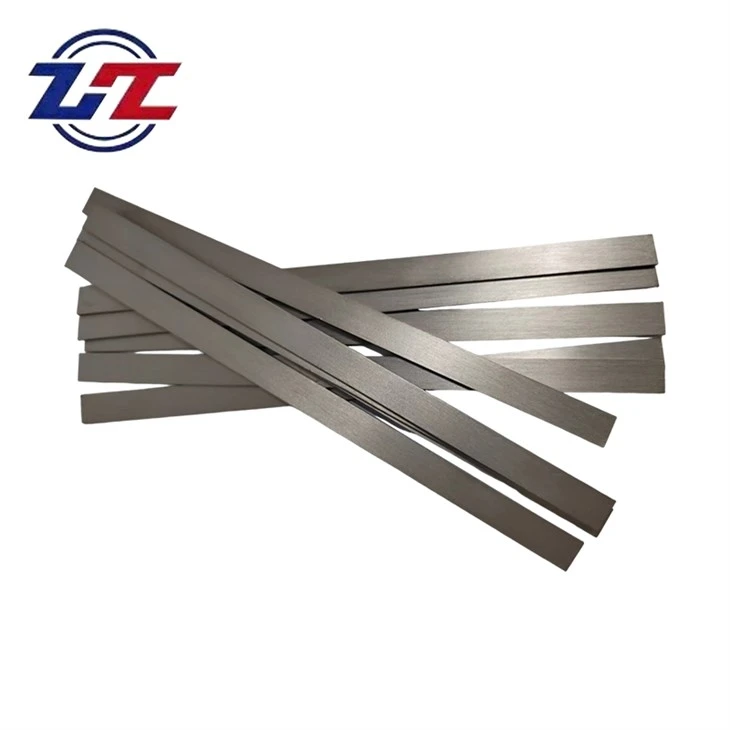

Niobium is a pretty amazing metal. It has a high melting point (around 2477 °C), excellent corrosion resistance, and good ductility. These properties make it a top choice for a variety of high - tech applications, such as aerospace, electronics, and nuclear industries. But when it comes to high - temperature creep, we need to look at the details.
The creep rate of niobium plates at high temperatures is influenced by several factors. One of the main factors is the temperature itself. As the temperature goes up, the atoms in the niobium lattice gain more energy and can move around more easily. This leads to an increase in the creep rate. For example, at relatively low high temperatures (say around 1000 °C), the creep rate might be quite low. But as we push the temperature closer to its melting point, the creep rate can skyrocket.
Another important factor is the applied stress. The higher the stress on the niobium plate, the faster it will creep. Think of it like pushing on a piece of clay. The harder you push, the quicker it deforms. In industrial applications, the stress can come from mechanical loads, thermal expansion and contraction, or internal stresses from the manufacturing process.
The microstructure of the niobium plate also plays a huge role. A well - annealed niobium plate with a uniform grain structure will have a different creep behavior compared to a plate with a lot of defects or a non - uniform grain size. Smaller grain sizes can sometimes increase the creep resistance at lower temperatures because the grain boundaries act as barriers to the movement of atoms. But at very high temperatures, the grain boundaries can also become paths for atom diffusion, which might increase the creep rate.
Impurities in the niobium can also affect the creep rate. Even small amounts of other elements can change the way the niobium behaves under high - temperature and stress conditions. Some impurities might form precipitates that can either help or hinder the movement of atoms, depending on their nature and distribution.
To measure the creep rate of niobium plates, we usually conduct creep tests. In these tests, we subject a small sample of the niobium plate to a constant load at a specific high temperature for a long period of time. We then measure the change in length of the sample over time to calculate the creep rate. These tests can take weeks or even months to complete, but they give us valuable data on how the niobium will perform in real - world applications.
Let's talk about some real - world applications. In the aerospace industry, niobium plates are used in engine components and heat shields. These parts are exposed to extremely high temperatures and stresses during flight. Understanding the creep rate of niobium is crucial to ensure the safety and reliability of these components. If the creep rate is too high, the parts could deform and fail, which is a major no - no.
In the electronics industry, niobium is used in high - temperature superconductors and other electronic components. The creep behavior of niobium at high temperatures can affect the performance and longevity of these devices. For example, in a superconducting magnet, any deformation due to creep could change the magnetic field and reduce the efficiency of the device.
As a Niobium Plate supplier, we make sure to provide high - quality niobium plates with well - controlled properties. We use advanced manufacturing techniques to optimize the microstructure and minimize impurities. We also conduct thorough testing to ensure that our niobium plates meet the required creep rate specifications for different applications.
If you're interested in other niobium products, we also offer Niobium Foil, Niobium Processed Parts, and Niobium Tube. These products also have their own unique properties and applications, and we can provide detailed information on their high - temperature behavior as well.
If you're in the market for niobium plates or any of our other niobium products, and you have questions about high - temperature creep or any other aspects, don't hesitate to reach out. We're here to help you find the right niobium solution for your specific needs. Whether you're in the aerospace, electronics, or any other industry, we can work with you to ensure that our niobium products meet your performance requirements.
References:
- "High - Temperature Materials Science" by some well - known materials science authors.
- Research papers on niobium creep behavior from leading materials research institutions.

