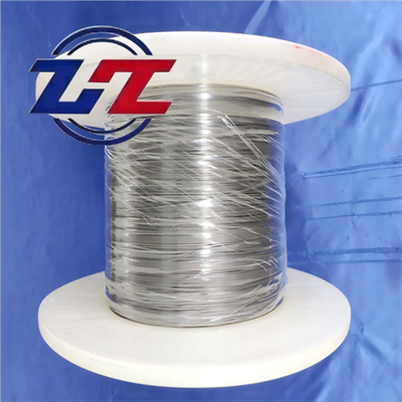
Ta-Nb Alloys: Shaping the Future of High-End Industries
Leave a message
Against the backdrop of global industrial upgrading and intensified technological competition, a rare metal material called "tantalum niobium alloy" is moving from behind the scenes to the forefront of the industry chain, becoming a key benchmark for measuring a country's high-end manufacturing and technological self-reliance.
This type of alloy is not an ordinary industrial raw material, but a "metamaterial" that combines high melting point, excellent corrosion resistance, excellent biocompatibility, and special electrical properties. Its value far exceeds its own weight and permeates every cutting-edge field from micro chips to vast space. This article aims to provide a comprehensive analysis of the tantalum niobium alloy industry, offering a broad and in-depth reference for colleagues in the industry.
From "Industrial Vitamins" to the Core Materials of "National Heavy Industries"
The strategic significance of tantalum niobium alloys primarily stems from their irreplaceable physical and chemical properties. Tantalum has a melting point of about 2996 ° C, and niobium also reaches about 2468 ° C, both of which are among the most heat-resistant metals. More importantly, they can maintain stability in extreme environments: they are almost unaffected by strong corrosive media such as boiling hydrochloric acid and aqua regia, exhibit excellent biocompatibility with human tissues, and also have good superconducting properties. These characteristics determine that tantalum niobium alloy is not a "icing on the cake" option, but a "must-have" for solving core bottleneck problems in fields such as aerospace, semiconductor manufacturing, high-end healthcare, new energy, and national defense and military industry.
Global market data confirms its importance. According to industry reports, the global tantalum niobium material market has reached approximately 4.286 billion US dollars in 2024 and is expected to continue expanding at a stable compound annual growth rate, with the potential to exceed 6 billion US dollars by 2031. The underlying logic of this growth is the rigid demand for high-performance materials from global trends such as artificial intelligence, 5G communication, green energy, and space exploration. Tantalum niobium alloy has risen from its role as an "industrial vitamin" such as a steel additive in the past to a core material that directly determines the performance and reliability of cutting-edge equipment, known as a "major national heavy weapon".
Advantages and disadvantages of tantalum (Ta) and niobium (Nb) after alloying
| Performance/Attributes | Tantalum (Ta)/tantalum based alloy | Niobium (Nb)/Niobium based alloy |
| Melting point (℃) | ≈3017°C | ≈2477°℃ |
| Density(g/cm3) | ~16.65 | ~8.57 |
| Crystal structure | BCC (body centered cubic) | BCC (body centered cubic) |
| Corrosion resistance/chemical stability | Excellent performance in most acidic environments, including some strong acid environments, due to the stable oxide film of Ta2O5 | Good performance in forming Nb2Os oxide film in high temperature/acidic environment, with certain corrosion resistance Stanford Advanced Materials |
| High temperature mechanical properties/thermal stability | Strong strength and creep resistance at high temperatures | Although the melting point and density are low, it has good toughness and ductility, and maintains a certain stability at high temperatures |
| Typical uses/advantages | Chemical equipment, corrosion-resistant heat exchangers, anti-corrosion coatings, ultra-high temperature structural components | Fields such as nuclear industry, electronics/semiconductors, lightweight structures, high-temperature alloy additives, etc |

Market size and demand growth trend chart

Tantalum capacitor array

Aerospace applications
High barrier manufacturing and constantly expanding innovation frontiers
The value realization of tantalum niobium alloy is based on extremely high technological barriers. Its industrial chain is full of challenges from ore mining, wet smelting separation, pyrometallurgical smelting to deep processing. For example, efficient separation of tantalum and niobium from complex coexisting minerals requires advanced solvent extraction techniques; To obtain high-purity tantalum materials for semiconductor chip manufacturing, the purity needs to reach 99.9999% (6N) level, which is extremely difficult in technology and has long been monopolized by foreign countries.
Currently, the forefront of industry technology is expanding in two main directions:
- Ultimate purity and ultra large size: In order to meet the needs of advanced semiconductor processes below 28 nanometers, the preparation technology of high-purity tantalum powder and large-sized (such as 12 inches) tantalum target blanks has become the focus of competition. Domestic leading enterprises have achieved large-scale production of 4N8 (99.998%) ultra-high purity tantalum powder, and have overcome the technology of large-scale ingot forging to prepare high-end target blanks, gradually achieving domestic substitution.
- Additive Manufacturing (3D Printing) and Material Design: Utilizing metal 3D printing technology to manufacture complex structured tantalum niobium alloy components has become a hot topic in research and development in fields such as aerospace. Spherical alloy powders (such as TiNbTa) optimized for printing processes are being developed, which not only enables lightweight design but also significantly reduces material waste. Meanwhile, new methods such as Integrated Computational Materials Engineering (ICME) are being used to design a new generation of alloys with better performance.
Application Ecology and Market Trends
The application ecology of tantalum niobium alloy is extremely extensive and constantly deepening towards high value-added fields:
- The cornerstone of the electronics industry: Tantalum capacitors are the "heart" of high-end electronic devices due to their small size, large capacity, and high reliability, consuming over half of the world's tantalum resources. In the semiconductor field, tantalum and tantalum nitride thin films are key barrier layers that prevent copper atom diffusion and are essential materials for advanced logic chip manufacturing.
- Aerospace engine: Its high temperature strength, creep resistance, and corrosion resistance make it an ideal choice for rocket engine thrust chambers, nozzles, and high-temperature components of the new generation of aerospace engines.
- Medical and Future Technology: Based on excellent biocompatibility, it is used in orthopedic implants, vascular stents, etc. Meanwhile, niobium titanium alloy is the main superconducting material used in superconducting cavities for magnetic resonance imaging (MRI) and large scientific devices such as particle accelerators.
Market trends indicate that demand is shifting from traditional consumer electronics cycles to long-term, stable growth driven by emerging fields such as AI computing power, large scientific devices, high-temperature alloys, and quantum computing. This requires material suppliers not only to provide standard products, but also to have a forward-looking research and development layout and the ability to quickly respond to customized needs.
The value of supply chain security and reliable suppliers
The global distribution of tantalum niobium resources is highly concentrated, with the main mineral sources located in Brazil, Australia, and other places. Geopolitical risks and price fluctuations in the supply chain have always existed. In recent years, ensuring stable supply of upstream resources through strategic investment has become one of the core strategies of industry-leading enterprises. For downstream buyers, this means that when choosing suppliers, the stability of the supply chain, consistency in quality, technical support capabilities, and product prices are equally important.
A reliable partner should be able to provide full process quality traceability from raw materials to finished products, with a diverse product system that can respond to different application scenarios (from plates, rods to pipes, wires, and customized shaped parts), and provide in-depth technical support in new material development and process challenges, jointly resisting supply chain risks and enhancing the competitiveness of end products.
Joining hands with professional partners to forge industrial resilience
In the world of tantalum niobium alloys, what we see is not only a series of high-performance materials, but also a microcosm of a country's high-end manufacturing system that is independently controllable and continuously innovative. The high barriers to entry and wide applicability of its technology determine that this is a field that requires long-term technological accumulation, rigorous process control, and stable resource coordination.
Shaanxi Zhongheng Weichuang Metal Materials Co., Ltd. is well versed in this field. We are committed to becoming the most trusted solution provider for customers in the field of tantalum niobium alloys, rather than simply a material supplier. We ensure excellent quality at every stage from melting to processing through a strict quality control system. With a professional technical team, we provide full support for customers' material selection, application, and process optimization, and ensure the reliability and efficiency of the supply chain through flexible production arrangements. Faced with the upgrading needs and technological challenges of various industries, Shaanxi Zhongheng Weichuang is willing to work hand in hand with global partners with a solid material foundation and professional cooperation spirit to jointly harness the infinite possibilities brought by tantalum niobium alloys and create a more stable and innovative industrial future.