

Understanding High Density Tantalum Material in Engineering Applications
Leave a message
Tantalum is widely recognized in advanced engineering fields for its high density, excellent corrosion resistance, and stable performance under extreme conditions. Among various tantalum products, high density tantalum material is often selected when material compactness and structural reliability are critical considerations.
This article focuses on the engineering meaning of high density in tantalum materials and why it matters in demanding applications.

What Does "High Density" Mean in Tantalum Materials
High density in tantalum materials does not simply refer to mass or weight. From an engineering perspective, it reflects the internal compactness of the material structure, including reduced internal porosity and a more uniform grain arrangement.
A denser structure contributes to predictable mechanical behavior and improved reliability, especially in environments where material stability is required over long operating periods.
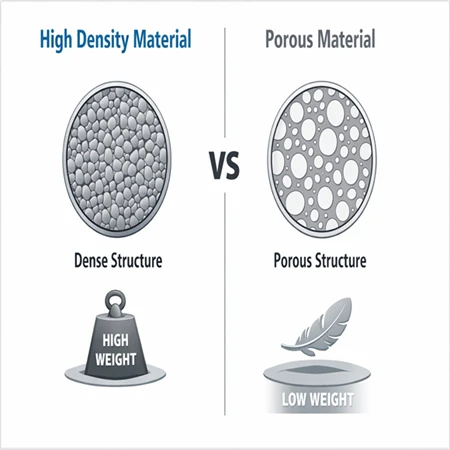
Dense Structure vs. Porous Structure
In practical applications, the difference between dense and porous material structures can directly affect performance. Materials with a compact internal structure generally show:
- More consistent mechanical properties
- Better resistance to chemical penetration
- Improved stability in vacuum or high-temperature conditions
By contrast, materials with internal voids or higher porosity may exhibit variability during machining or service, particularly under thermal or corrosive stress.

Why High Density Matters in Engineering Environments
High density tantalum material is often considered in applications where operating conditions place strict demands on material integrity. These environments may include high temperatures, vacuum systems, or exposure to aggressive chemical media.
In such conditions, material compactness helps maintain dimensional stability and supports long-term performance, reducing the risk of degradation during service.
Processing and Material Consistency Considerations
Achieving high density in tantalum materials depends on controlled manufacturing and processing practices. From raw material preparation to consolidation and forming, consistency at each stage plays a key role in the final material structure.
For engineering projects, material traceability and batch consistency are often as important as nominal chemical composition, particularly when materials are used in critical systems.
Conclusion
High density tantalum material is not defined by appearance alone, but by its internal structure and performance stability. Understanding the role of density helps engineers and technical buyers select materials that align with application requirements, especially in environments where reliability cannot be compromised.
This perspective allows tantalum materials to be evaluated not only as products, but as engineering solutions.


