Why Tighter Tolerances Increase the Cost of Tantalum Parts?
Leave a message
When requesting a quotation for tantalum parts, many buyers notice that prices can vary significantly between suppliers even when the drawings appear almost identical.
The material grade may be the same, the dimensions may look similar, and the quantity may not be very different. However, one detail often has a major impact on manufacturing cost: dimensional tolerance.
A drawing with tighter tolerance requirements represents a different manufacturing challenge. It requires more control during processing, additional inspection steps, and greater attention throughout the production process.
Understanding this difference helps buyers evaluate quotations more accurately and communicate technical requirements more effectively.
A Drawing Shows Dimensions, but Not the Manufacturing Difficulty
A technical drawing defines the final requirements of a tantalum component, but it does not show the complete manufacturing process behind it.
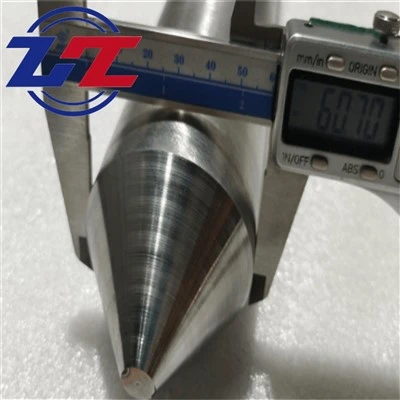
For example, producing a part with a tolerance of ±0.10 mm and producing the same part with a tolerance of ±0.02 mm may require completely different approaches.
The second case usually requires more careful machining control, more frequent measurements, and stricter process management. The additional work is not always visible from the finished part, but it directly affects production time and cost.
In practical manufacturing, achieving tighter tolerances is not simply a matter of adjusting a machine setting. It requires stable material conditions, suitable processing methods, and experienced operators who understand how the material behaves during production.
Tantalum Requires Careful Machining Control
Tantalum has excellent corrosion resistance and high-temperature stability, which makes it valuable in demanding applications such as chemical equipment, vacuum systems, semiconductor manufacturing, and scientific instruments.
At the same time, processing tantalum requires careful control because the material characteristics are different from common metals.
During machining, factors such as cutting conditions, tooling selection, and heat generation can influence dimensional stability and surface quality.
For precision tantalum components, manufacturers often need to consider the entire machining sequence rather than focusing only on the final cutting operation. Small adjustments during processing can help reduce deformation and improve consistency between batches.
More Accurate Dimensions Require More Inspection
More Accurate Dimensions Require More Inspection
For standard products, inspection may focus mainly on final dimensions and material certification.
For precision tantalum parts, quality control usually involves more checkpoints during production.
Additional measurements may be required after different processing stages to confirm that the component remains within the required tolerance range.
This increases production time, but it also reduces the risk of discovering dimensional issues after the part has already reached the final stage.
From a manufacturing perspective, preventing problems during processing is usually more efficient than correcting them after completion.
Material Utilization Also Affects the Final Price
Tolerance requirements can also influence material selection and machining methods.
When a component requires very precise dimensions, manufacturers may need to start with a more suitable raw material size to achieve better control during machining.
Using oversized material may increase machining time and material waste, while selecting a closer starting size may improve production efficiency.
For tantalum, where raw material value is relatively high compared with common metals, controlling material utilization is an important part of cost management.
Tight Tolerances Are Valuable When They Serve a Real Purpose
Not every application requires extremely tight tolerances.
One common situation in industrial purchasing is that drawings include very strict tolerances because they were copied from previous projects or provided as standard requirements.
Before production, it is often helpful for buyers and manufacturers to discuss which dimensions are critical for actual performance and which dimensions have more flexibility.
A practical tolerance requirement can help balance product performance, manufacturing efficiency, and overall project cost.
Choosing a Tantalum Supplier Requires More Than Comparing Prices
When comparing quotations for tantalum parts, the lowest price does not always represent the most economical choice.
A reliable manufacturer considers the relationship between drawing requirements, processing methods, inspection procedures, and delivery reliability.
For custom tantalum components, the real value comes from the ability to produce consistent parts that meet technical requirements over repeated orders.
A supplier with manufacturing experience can help buyers understand how specifications influence cost and provide more practical solutions before production begins.
For custom tantalum parts, early communication about critical dimensions is often more valuable than simply requesting the tightest possible tolerance. A clear understanding of the actual application allows manufacturers to recommend a more practical processing approach while maintaining the required performance.