Tantalum Rods For Aerospace Applications
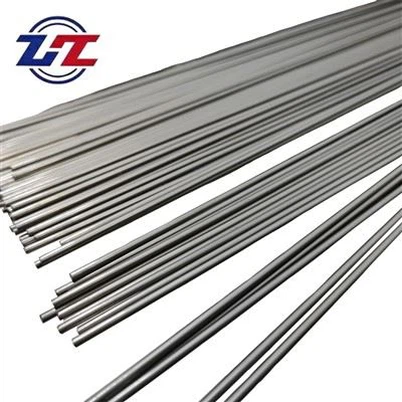
Tantalum, chemical symbol Ta, is a rare metal with high melting point, high density, and excellent corrosion resistance. Tantalum rods are mainly used to manufacture key components of rocket engines and jet engines, such as combustion chambers and nozzles. In addition, it is also used as a structural material for satellites and spacecraft to cope with extreme temperatures and corrosive environments.
Description
Shaanxi Zhongheng Weichuang Metal Materials Co., Ltd. supplies high-quality rare metals, mainly including niobium hafnium alloy 103, tungsten, tantalum, niobium, hafnium, titanium, zirconium, nickel, vanadium and alloys of conventional processed profiles such as plates, strips, coils, rods, wires, pipes, as well as deep processed products such as ships, crucibles, sputtering targets, coating targets, machined parts, high-temperature furnace insulation screens, heating elements, furnace bodies (heating furnaces, annealing furnaces), corrosion-resistant equipment, etc.
As a manufacturer, supplier, and exporter of tantalum, we provide high-purity, high-temperature resistant, corrosion-resistant, aerospace, defense, military, and marine engineering specialized products with worry free quality and more favorable prices! Customer service is always online, so you have no worries.
Performance advantages

High melting point
Tantalum has a melting point of approximately 3017 ° C, allowing it to operate stably in high-temperature environments.

Corrosion resistance
Tantalum has excellent corrosion resistance to various acids and bases, extending the service life of components.

High strength and high density
These characteristics make it an ideal choice for aerospace structures.
Tantalum rod (purity ≥ 99.95%) has become the preferred material for ultra-high temperature components due to its melting point of 2996 ℃ (second only to tungsten) and the characteristic of maintaining 80% tensile strength at 2200 ℃. Its thermal expansion coefficient (6.5 × 10 ⁻⁶/℃) is matched with nickel based alloys, which can reduce the risk of interface failure caused by thermal stress. In an oxidizing environment, the dense Ta ₂ O ₅ film (melting point 1872 ℃) formed on the surface of the tantalum rod can effectively block oxygen diffusion, enabling the component to have a continuous working life of over 2000 hours at 1500 ℃.
Typical application scenarios and engineering cases
- Core components of aircraft engines
Combustion chamber liner: GE Aviation uses a 12mm diameter tantalum tungsten alloy rod (TaW-10%) to manufacture the LEAP engine combustion chamber, which can withstand temperatures up to 1800 ℃ and has a lifespan three times longer than traditional Inconel 718 liners, resulting in a 15% increase in fuel efficiency.
Turbine blade cooling channel: Rolls Royce uses a 0.8mm tantalum rod array to manufacture hollow turbine blades, which improves the uniformity of cooling airflow by 40% and enables the blade working temperature to exceed the critical value of 1400 ℃.
- Spacecraft thermal protection system
The SpaceX Starship re-entry module adopts a honeycomb structure woven with tantalum rods (density 1.8g/cm ³), which can maintain insulation for 10 minutes under aerodynamic heating at 2000 ℃, reducing weight by 60% compared to traditional ceramic tiles.
- Upgrading military equipment
The tantalum rod guidance module of the American "Thor" missile (with an anti radiation coating thickness of 50 μ m) has a signal transmission stability of 99.99% in a nuclear electromagnetic pulse environment, which is two orders of magnitude more reliable than the aluminum alloy solution.
The breakthrough progress of tantalum rods in cutting-edge applications currently faces three major technological bottlenecks: in terms of cost control, in response to the high cost of 300 yuan/g for high-purity tantalum rods (≥ 99.99%), electron beam zone melting technology has increased the grain size from ASTM level 6 to level 8, resulting in a significant increase in material utilization rate from 45% to 72% and a significant reduction in unit cost; In the field of composite technology, NASA's Ta Cu gradient alloy rod adopts laser cladding technology to achieve a copper tantalum interface bonding strength of 450MPa, completely solving the problem of thermal matching failure caused by the difference in thermal expansion coefficient between traditional tantalum rods and copper heat sinks; Micro nano manufacturing dimension, applied to the 0.1mm tantalum rod array of microsatellite propulsion system, relies on electrochemical microfabrication technology to control the channel wall thickness accuracy within ± 1 μ m, providing a highly reliable fluid control solution for micro thrusters in deep space probes. These technological breakthroughs are driving the leapfrog development of tantalum rods from traditional electronic components to cutting-edge fields such as aerospace, deep space, and quantum communication.
The tantalum rod based thermal structure, with its high temperature resistance above 3000 ℃, can increase the re-entry frequency of spacecraft from 10 to 50 times, while reducing single maintenance costs by 80%. The Starship project of SpaceX in the United States has verified the reliability of tantalum alloy thermal protection systems during frequent reentry processes, and it is expected that the global reusable spacecraft market will drive a 40% increase in demand for tantalum rods by 2030.
The application of its memory alloy in adaptive variable cycle engines can achieve real-time adjustment of the intake duct cross-sectional area, reducing subsonic cruise fuel consumption by 25%. The European FCAS project uses an intelligent intake duct made of tantalum nickel shape memory alloy (Ta-45Ni), which has passed 2000 fatigue tests and will drive the military aviation tantalum rod market to exceed $1.5 billion by 2025.
The UO ₂ fuel particles it envelops can maintain structural integrity in extreme environments of 3000 ℃, shortening the Mars mission cycle from 2 years to 8 months. NASA's DRACO project has validated the radiation resistance of tantalum tungsten alloy (Ta-10W) fuel cladding, and it is expected that deep space exploration will consume 30% of the world's high-purity tantalum rod production capacity by 2030.
Hot Tags: tantalum rods for aerospace applications, China tantalum rods for aerospace applications manufacturers, suppliers, factory, tantalum 2 5 tungsten alloy, Tantalum 2 5 Tungsten Rod, tantalum alloy for industrial parts, tantalum carbide, tantalum metal for high tech applications, tantalum wire for chemical processing
Send Inquiry
You Might Also Like