Titanium Wire
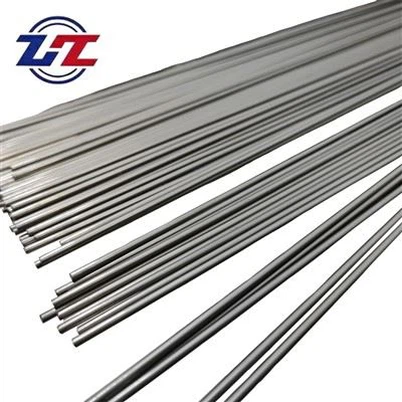
Titanium wire is a slender material made of titanium metal, which has high strength, low density, corrosion resistance, and good biocompatibility. Titanium wire, due to its unique properties, is widely used in multiple fields and is an indispensable and important material in modern industry.
Description
product key technologies

Raw materials, melting, and surface treatment
Using high-purity sponge titanium with a purity of ≥ 99.9% (industrial pure titanium TA1/TA2) or customized alloys (such as Ti-6Al-4V, nickel titanium alloys), nuclear industry grade neutron sensitive elements such as boron and cadmium need to be controlled.
Vacuum consumable electric arc furnace (vacuum degree ≤ 10 ⁻ ³ Pa) melts 2-3 times to eliminate impurity segregation, with ingot diameter of 50-150mm.
Medical grade: Sandblasting and acid washing enhance bone integration ability, and surface roughness promotes cell adhesion.
Industrial grade: Anodizing forms a colored corrosion-resistant film, and micro arc oxidation generates a ceramic layer (hardness increased by 5 times); Laser texturing technology enhances the conductivity and reliability of electronic components.
Plastic Forming and Functional Characteristics
Hot processing: After the ingot is uniformly annealed at 900-1050 ℃, it is opened to a diameter of 5-10mm through hot forging (750-950 ℃) or hot rolling (800-900 ℃).
Cold drawing: Multi pass drawing at room temperature (single deformation ≤ 15%), combined with intermediate annealing (600-800 ℃) to eliminate work hardening, the finished wire diameter can reach 0.02mm; ultra-fine wire (≤ 0.05mm) requires diamond molds and special lubricants (lime milk/animal oil).
Biocompatibility: The surface TiO ₂ oxide layer promotes bone cell adhesion, and the 10-year survival rate of orthopedic implants is>95%; Non magnetic compatible MRI examination.
Shape memory: Nickel titanium alloy wire triggers deformation at body temperature, simplifying minimally invasive surgical procedures.

application area
1. Medical and health care
Implanted instruments: Pure titanium wire is used for skull repair plates and crown fixation; Nickel titanium alloy wire is used to manufacture vascular stents (Φ 0.1~1.0mm) and orthodontic wires.
Surgical tools: Antibacterial titanium wire made minimally invasive surgical forceps and electrodes.
2. Aerospace
Aircraft fasteners: TC4 titanium alloy wire replaces steel bolts to reduce weight by 40% and improve fuel efficiency.
Engine components: High temperature alloy wire (such as Ti-6Al-4V) is used for turbine disk welding and blade repair.
3. High end industry
Chemical equipment: Titanium palladium alloy wire welding reactor lining, resistant to strong acid corrosion; Pure titanium wire woven filter screen is used for seawater desalination.
Energy technology: Ti-15Mo alloy wire as vacuum ion pump suction source; Titanium wire electrodes are used for bipolar plates in hydrogen fuel cells.
4. Emerging fields
3D printing: Ultra fine titanium wire (0.05mm) is used as an additive manufacturing raw material to customize complex parts.
Micro robot: nickel titanium alloy wire drives an artificial muscle system to achieve battery free powered movement.
Titanium wire, with its groundbreaking mechanical properties and environmental stability, has become a key material link connecting cutting-edge technology and industrial upgrading. From the intelligent deformation of 0.1mm nickel titanium alloy wire in vascular stents to the breakthrough of welding repair technology for TC4 alloy wire in aviation engines, titanium wire continues to redefine the application boundaries of materials. Its lightweight, corrosion-resistant, and biocompatible characteristics are rewriting industry standards for medical implants, high-end equipment, and energy technology.
The current technological bottleneck is focused on the precision and cost control of ultra-fine wire processing, which requires deep collaboration between materials science, precision manufacturing, and digital technology. With the development of electrolytic wire production and 3D printing composite technology, titanium wire will unleash greater potential in emerging fields such as micro robot driving and space in orbit manufacturing.
Titanium wire is not only an industrial component, but also has the potential to become the "nerve and muscle" of intelligent systems. When the material properties are deeply integrated with artificial intelligence and biotechnology, titanium wire may evolve from a functional carrier to an active material with environmental responsiveness, ushering in a new round of technological revolution.
Hot Tags: titanium wire, China titanium wire manufacturers, suppliers, factory
Send Inquiry
You Might Also Like