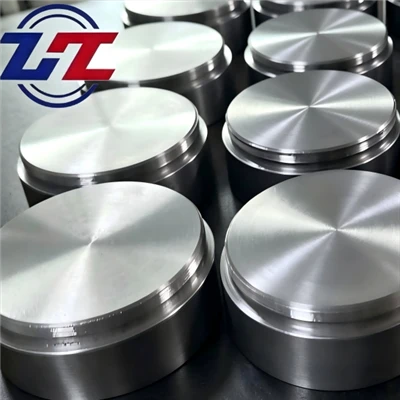
High Temperature Resistant Hafnium Foil
High temperature resistant hafnium foil is an ultra-thin plate-like material made from high-purity hafnium metal (usually ≥ 99.9%) as the substrate, through precision rolling, heat treatment, and surface coating technology. Its core value lies in its excellent high-temperature stability and antioxidant capacity, which can withstand extreme environments above 1600 ° C for a long time. It is a key material in the fields of aerospace, nuclear energy, and high-temperature industry.
Description
Shaanxi Zhongheng Weichuang Metal Materials Co., Ltd. is one of the leading manufacturers and suppliers of high temperature resistant hafnium foil in China. We are committed to providing high quality customized products with competitive price. Please feel free to buy durable high temperature resistant hafnium foil for sale here from our factory. Also, quotation is available.
The core characteristics of high-temperature resistant hafnium foil make it an ideal material for extreme environments. Through surface coating techniques such as hafnium carbide (HfC) or hafnium disilicide (HfSi ₂), as well as alloying treatment, this material can significantly increase its oxidation resistance temperature from about 400 ° C of pure hafnium to the range of 1600-2000 ° C. In high-temperature air, its oxidation rate can remain stable below 0.1 mg/cm ² · h, demonstrating excellent high-temperature stability.
Thanks to its high melting point of 2233 ° C, hafnium foil can maintain excellent mechanical properties even at extreme temperatures. For example, its tensile strength is still not less than 150 MPa at 1200 ° C, and it has excellent creep resistance, which can adapt to severe thermal shock and long-term high temperature working environments.
In addition to high temperature resistance, hafnium foil also has excellent corrosion resistance to various harsh media, and can resist the erosion of high-temperature gases and liquid metals (such as sodium, lead bismuth, etc.). It is worth mentioning that it also has good resistance to neutron irradiation damage and can withstand neutron doses higher than 10 Ω¹ n/cm ², which makes it very suitable for use in nuclear energy systems.
In terms of physical properties, hafnium foil exhibits excellent comprehensive performance. Its density is 13.31 g/cm ³, and it can be made into ultra-thin foil with a thickness of only 0.03 mm using precision rolling technology. Simultaneously supporting multiple processing methods such as stamping, welding, and winding, it can be easily integrated into various complex structures to meet the needs of different application scenarios.


High temperature resistant materials play an irreplaceable role in many cutting-edge technologies and industrial fields, and their application scope covers almost all scenarios that require coping with extreme thermal environments. The following is a systematic summary of its main application areas:
1, Aerospace and Hypersonic Flight
This is the most cutting-edge and demanding application field for high-temperature resistant materials.
- Engine hot end components: turbine blades, combustion chambers, nozzles, and other components need to withstand high-temperature gas erosion exceeding 1200 ° C. Nickel based single crystal high-temperature alloys, ceramic matrix composite materials (CMC), and high-temperature alloy honeycomb panels are commonly used.
- Thermal protection system (TPS): used for spacecraft reentry chambers, hypersonic aircraft leading edges (nose cones, wing leading edges), to withstand aerodynamic heating exceeding 2000 ° C. The main materials include carbon carbon composites (C/C), reinforced carbon based composites (C/SiC), and ultra-high temperature ceramics (UHTCs), such as zirconium/hafnium carbides and borides.
- Rocket propulsion system: Solid rocket engine nozzle throat liner, liquid engine thrust chamber, using refractory metals (tungsten, molybdenum, niobium) and their alloys, supplemented by silicide coating for oxidation resistance.
2, Energy and Power Sector
The energy conversion efficiency is directly related to the working temperature, and high-temperature resistant materials are the key to improving efficiency.
- Gas turbine: The turbine blades and guide vanes are made of high-temperature alloys and thermal barrier coatings (TBCs), and the increase in operating temperature directly determines the power generation efficiency and aircraft engine thrust.
- Nuclear energy industry:
Fission reactor: The nuclear fuel cladding material (zirconium alloy, SiC composite material) and reactor pressure vessel (high-strength steel) need to be resistant to high temperature and radiation.
Fusion reactors (such as ITER): The first wall material and divertor face high-temperature plasma, requiring the use of tungsten copper composite materials, beryllium, and high-purity beryllium copper.
- Clean energy system:
Solid oxide fuel cell (SOFC): Components such as connectors and electrolytes need to work for a long time at 800-1000 ° C, using ceramic materials such as lanthanum chromate and stabilized zirconia.
Concentrated solar power (CSP): Molten salt heat storage tanks and heat exchange pipelines need to be resistant to high-temperature molten salt corrosion, using stainless steel and nickel based alloys.
3, Industrial Manufacturing and High Temperature Treatment
This is the most traditional and widely used application field.
- Metallurgical industry: ironmaking blast furnace lining (carbon brick, corundum brick), steel continuous casting immersion nozzle (aluminum carbon, zirconium carbon materials), melting crucible (graphite, zirconia).
- Glass industry: glass melting furnace electrodes and refractory materials (tin oxide electrodes, AZS refractory bricks).
- Heat treatment and sintering: Vacuum sintering furnace heating element (molybdenum, graphite), insulation screen (molybdenum sheet, niobium sheet), sintering boat (graphite, alumina).
4, Chemical Industry and High Temperature Corrosion Environment
Petrochemical industry: Cracking furnace tubes (HP series heat-resistant steel) and reforming units (stainless steel, alloy steel) require resistance to high temperature hydrocarbon media.
- Coal chemical and gasification: The inner wall of the gasifier needs to withstand high-temperature slag erosion, and special refractory materials such as chromium aluminum yttrium are used.
- Waste disposal: The grate and lining of hazardous waste incinerators need to be resistant to high temperature corrosion and abrasion.
5, Electronics and Semiconductor Industry
- Semiconductor manufacturing: diffusion furnace, oxidation furnace tube (high-purity quartz, silicon carbide), crystal boat (quartz, silicon carbide).
- MEMS devices: Some microelectromechanical systems require operation in high-temperature environments and use heat-resistant thin film materials such as polycrystalline silicon and silicon carbide.
6, National Defense and Military Equipment
- Hypersonic weapons: thermal protection materials for warheads and guide head covers (similar to aerospace).
- Tanks and armored vehicles: The engine turbocharger and exhaust system use high-temperature alloys.
- Ship power system: Gas turbine is its core power device.
High temperature resistant hafnium foil has broken through the antioxidant bottleneck of hafnium metal through coating technology, purity control, and precision rolling process, providing a lightweight and long-life solution for ultra-high temperature environments. Its application has significantly pushed the technological boundaries of hypersonic flight, nuclear energy technology, and high-end manufacturing, making it an indispensable strategic material under extreme working conditions.
Hot Tags: high temperature resistant hafnium foil, China high temperature resistant hafnium foil manufacturers, suppliers, factory, Hafnium Foil For Semiconductor Equipment
Send Inquiry
You Might Also Like