C103 Alloy for Aerospace Propulsion
Leave a message
With the rapid development of aerospace technology towards high thrust to weight ratio, reusability, and hypersonic direction, power systems are facing unprecedented extreme service environment tests. C103 niobium hafnium alloy, as a key refractory metal material, occupies an irreplaceable position in hot end components such as rocket engine nozzles and aircraft engine blades due to its excellent high specific strength, good formability, and welding performance. However, its inherent Achilles heel - insufficient high-temperature antioxidant properties - has become a bottleneck restricting its wider application. This article will deeply analyze the core challenges faced by C103 alloy in the field of aerospace power, systematically expound on the technological breakthroughs from material optimization to surface protection of silicide coatings, and look forward to its future development path.
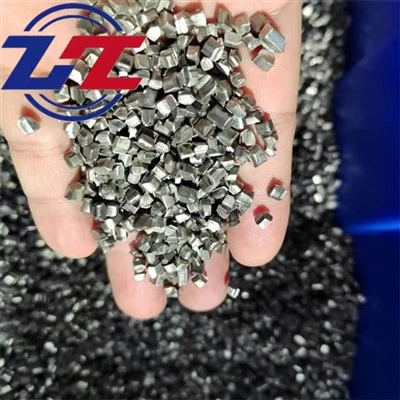
C103 partial product diagram


The Achilles' heel of C103 alloy - oxidation and embrittlement
The oxidation resistance of C103 alloy rapidly deteriorates in an ultra-high temperature oxygen rich environment exceeding 1200 ° C. Its failure is not simply a loss of weight, but involves complex microscopic mechanisms:
- Catastrophic oxidation: Porous, loose, and volatile niobium pentoxide (Nb ₂ O ₅) will form on the surface of the alloy, which cannot form a protective oxide film, resulting in a rapid oxidation process at a linear rate and rapid material consumption.
- Pesting oxidation damage: Even more deadly is that oxygen diffuses inward along grain boundaries, generating oxides inside the matrix, leading to material brittleness, sharp decrease in strength and toughness, and easy cracking and peeling under thermal stress.
- Performance ceiling: Although the addition of hafnium element through solid solution strengthening enhances the high-temperature strength of the alloy, its long-term use temperature is still limited to about 1370 ° C, and without coating protection, its oxidation resistance life is extremely short.
Material optimization and surface protection system
1. Material optimization: fine control of microstructure
The core strengthening mechanism of C103 is solid solution strengthening. By precisely controlling the content of hafnium (usually between 5% -7%) and introducing trace amounts of tungsten, carbon, yttrium, and other elements, grain boundaries can be further strengthened, grain growth can be suppressed, and high-temperature creep performance can be improved. The guarantee of batch consistency relies on precise control of chemical composition and microstructure throughout the entire process from high-purity raw materials to vacuum melting.
2. Surface Protection System: Evolution of Coating Technology
Applying anti-oxidation coating to C103 components is the key to their survival in ultra-high temperature environments. Among them, silicide coating technology is currently the most mature and widely used solution.
- Technical principle: By forming a stable niobium disilicide diffusion layer on the surface of the component and generating a dense silicon dioxide glass film on the outermost layer. This layer of glass film can effectively block the inward diffusion of oxygen, which is fundamental to achieving antioxidant properties.
- Preparation process: The embedding infiltration method is a traditional and mainstream technique, but it poses challenges to the uniformity of coverage of complex components. Advanced processes such as slurry sintering, chemical vapor deposition, and physical vapor deposition provide the possibility to manufacture gradient composite coatings that are more uniform, dense, and have stronger adhesion to the substrate, such as Si-Mo-Cr-Al-Y system.
Performance characterization: The quality of the coating needs to be comprehensively evaluated through cyclic oxidation testing, thermal shock testing, and burner rig testing that is closer to real working conditions, to ensure its long-term reliability under rapid temperature changes and gas erosion.
The "trinity" system that ensures component reliability
A successful C103 component is not only a victory in materials and coatings, but also the result of the synergy between materials, design, and manufacturing processes.
- Advanced Manufacturing Technology: Plastic Processing and Superplastic Forming Technology are used to manufacture complex hollow film cooling blades; Additive manufacturing provides a new approach for the integrated manufacturing of rocket engine nozzles with complex internal flow channels, but also faces challenges such as pore and crack control.
- Connection technology: Electron beam welding and diffusion welding are used to reliably connect C103 components with other materials, and their joint performance is key to evaluating the overall structural integrity.
- Whole process quality control: from raw materials to finished products, strict non-destructive testing, statistical process control, and final performance testing are the cornerstone to ensure that every C103 component deployed to space is foolproof.
Opportunities and R&D directions
Looking towards the future, C103 alloy is still full of opportunities in the commercial aerospace and hypersonic aircraft fields. Its technological development path is clear and visible:
- Alloy system upgrade: Develop higher strength solid solution strengthening alloys such as WC-3015, or explore Nb Si based ultra-high temperature alloys to break through the upper limits of temperature and strength.
- Coating Technology Revolution: Developing environmental barrier coatings to resist water oxygen corrosion, self-healing coatings to achieve automatic repair of damaged areas, and ultra-high temperature ceramic coatings to cope with more extreme service environments.
- Multi material fusion design: The combination design of CCMC ceramic matrix composite material and C103 alloy is adopted to maximize their respective advantages in various temperature ranges, which is an inevitable trend in future thermal structure design.
The journey of C103 niobium hafnium alloy is like the stars and the sea. By continuously deepening our understanding of its micro mechanisms, innovating its surface engineering and manufacturing processes, and establishing a quality management system throughout its entire lifecycle, this classic refractory metal will continue to play an indispensable key role in the new generation of aerospace power systems, safeguarding humanity's dream of exploring the vast universe.