

Cost–Performance Trade-off: C103 vs Alternative Refractory Alloys
Leave a message
A Procurement & Project Manager Quick Guide
One-minute takeaway
- C103 = performance-first, highest cost
- Nb-1Zr = balanced option for cost and performance
- Many projects do not require the full capability of C103
- Over-specifying materials often leads to higher cost and longer lead time
Material selection should be driven by actual operating conditions, not maximum theoretical limits.
When C103 is the right choice
1. CC103 is justified when the application involves:
- Continuous service temperature ≥ 1200 °C
- Strict requirements for creep resistance and structural stability
- Mission-critical aerospace or propulsion systems
- Projects with performance-driven budgets already approved
2. CCost considerations:
- Hafnium-containing alloy with volatile raw material pricing
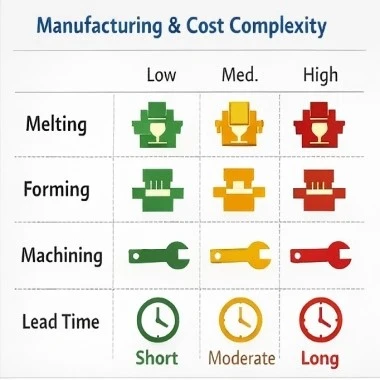
- Multiple vacuum melting steps
- Higher fabrication and machining complexity
3. CConclusion:
C103 is a performance insurance, not a default material.


Cost-effective alternatives
1. CNb-1Zr (Most common alternative)
- Suitable for service temperatures up to ~1100 °C
- Good formability and machinability
- Significantly lower material and processing cost than C103
CRecommended for:
Structural components, prototype programs, and cost-sensitive projects.
2. CPure Niobium
- Lowest material cost
- Easy to fabricate and widely available
- Limited creep resistance at elevated temperatures
CRecommended for:
Non-load-bearing parts, liners, and components with intermittent thermal exposure.
Procurement-oriented comparison
| Decision Factor | C103 | Nb-1Zr | Pure Nb |
| High-temperature capability | Excellent | Good | Moderate |
| Manufacturing complexity | High | Medium | LOw |
| Lead-time risk | High | Medium | LOw |
| Overall cost level | High | Medium | LOw |
A common project risk
A frequent issue in projects is material over-specification during early design, which later:
- Limits cost optimization options
- Extends production lead time
- Prevents material downgrading during procurement
Best practice:
Align engineering and procurement teams early on:
- Actual operating temperature
- Load-bearing requirements
Continuous vs intermittent exposure
Final takeaway
C103 remains the right choice for extreme, mission-critical applications.
However, from a procurement and project management perspective,
selecting an alloy that meets-rather than exceeds-performance requirements often reduces total project cost, lead-time risk, and supply pressure.


