How to Choose the Right Form of Tantalum Material for Your Application
Leave a message
Start With the Application Requirements
Choosing tantalum for an industrial application involves more than confirming the material grade. The form in which tantalum is supplied also affects how it can be used, processed, and incorporated into a finished product.
Tantalum is available in several forms, including plate, sheet, rod, tube, wire, foil, crucibles, and granules. Each form serves different purposes, depending on the required dimensions, geometry, manufacturing route, and operating environment.
Before selecting a product form, buyers and engineers should establish the intended application, the material specifications, and any requirements related to corrosion resistance, temperature, purity, or dimensional accuracy. These details help narrow the available options and reduce the risk of ordering a form that does not suit the intended use.
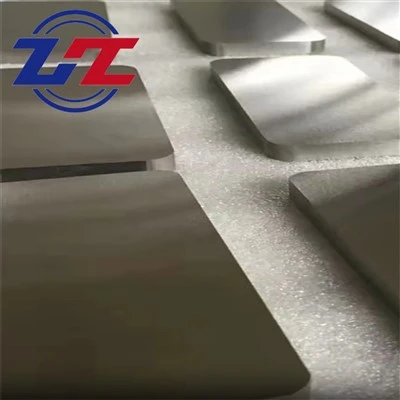
Tantalum Plate and Sheet for Flat Components
Tantalum plate and sheet are commonly considered when an application requires flat material for fabrication, lining, protective surfaces, or the production of components with relatively broad surfaces.
The distinction between plate and sheet is generally related to thickness, but the exact classification depends on the applicable standard and product specification. Buyers should therefore confirm the required thickness and tolerances rather than rely on the product name alone.
Thickness, width, length, surface condition, and material grade are important purchasing parameters. If the material will undergo forming, cutting, or welding, the planned fabrication process should also be considered when defining the supply requirements.
Tantalum Rod and Tube for Different Geometries
Tantalum rod is suitable for applications requiring solid cylindrical stock. It may be used as a starting material for machined components or for other applications where a solid bar-shaped product is required.
Tantalum tube, by contrast, provides a hollow cross-section. It may be considered for tubular components, protective sleeves, or equipment parts where the internal diameter and wall thickness are important.
These forms are not interchangeable simply because they share the same material. A rod and a tube differ in geometry, material distribution, and the amount of subsequent processing they may require.
When purchasing either form, buyers should specify the outside dimensions, length, and applicable tolerances. For tubes, the inside diameter and wall thickness are also essential. The required material grade and supply condition should be confirmed against the relevant specification.
Tantalum Wire and Foil for Fine or Thin Material Requirements
Tantalum wire is used where a relatively small cross-section is required. Depending on the application, important parameters may include wire diameter, diameter tolerance, surface condition, mechanical properties, and the condition in which the wire is supplied.
Tantalum foil is a thin, flat product used in applications where limited material thickness is important. Thickness uniformity, width, surface quality, and handling requirements can become particularly significant as the foil becomes thinner.
Wire and foil should be selected according to the dimensions and functional requirements of the final application, not simply because one form appears easier to handle. For demanding applications, buyers should also confirm the applicable material standard and any required testing or certification.

Tantalum Crucibles and Granules Serve Different Purposes
Tantalum crucibles are shaped containers used in suitable high-temperature, laboratory, and materials-processing applications. Their suitability depends on factors such as the process temperature, the chemical environment, the materials being handled, and the crucible's dimensions.
A crucible's shape and wall thickness must match the intended operating conditions. Compatibility should be assessed for the complete process, because tantalum's general material properties do not guarantee suitability in every chemical or thermal environment.
Tantalum granules, on the other hand, are particulate material rather than a ready-made component. They may be used as feedstock or in specialized material-processing applications, depending on their specified form and quality requirements.
For granules, buyers should confirm particle-size distribution, purity, chemical composition, packaging, and any process-specific requirements. A crucible and granules therefore serve fundamentally different purposes and should be specified according to their intended roles.
Match the Product Form to the Specification
The most suitable tantalum form depends on the requirements of the application rather than on the product name alone. A flat component may require sheet or plate, while a tubular application may require tube with a specified wall thickness. Fine-dimensional requirements may call for wire or foil, and specialized processing may require crucibles or granules.
When preparing a purchase specification, buyers should identify the product form, material grade, dimensions, tolerances, quantity, applicable standard, and required inspection documents. For applications with demanding operating conditions, the service environment and intended processing route should also be communicated to the material supplier.
Clear specifications make it easier to evaluate whether the proposed material is appropriate and whether the supplied product can meet the intended requirements.

Confirm the Material Grade and Supply Condition
Selecting the correct form is only part of the decision. Tantalum products may differ in chemical composition, purity, mechanical properties, and supply condition, depending on the grade and manufacturing route.
These differences can affect whether a product is suitable for forming, machining, high-temperature service, or a particular chemical environment. Buyers should avoid assuming that all tantalum products with the same nominal dimensions will perform identically.
The material grade, applicable standard, and required documentation should be confirmed before an order is placed. Where necessary, buyers should also specify testing requirements and request the relevant material certificate or inspection report.
A Practical Approach to Tantalum Product Selection
A sound selection process begins with the intended application and works backward to the required material form and specification. This approach helps buyers avoid defining a product only by its dimensions while overlooking the conditions that determine its suitability.
By considering geometry, dimensions, material grade, operating environment, and documentation together, engineers and procurement teams can establish clearer requirements for tantalum plate, sheet, rod, tube, wire, foil, crucibles, and granules.
The goal is not to select the most elaborate product form, but to identify the form and specification that meet the actual application requirements.