Niobium's Role in Quantum Computing & AI
Leave a message
With the rapid development of quantum computing technology, its potential applications in various industries are gradually emerging, especially in the fields of artificial intelligence (AI) and medicine. Among them, niobium, as an important rare metal, is becoming an indispensable key material in the field of quantum computing due to its excellent superconducting properties. Especially in the development of the "Origin Wukong" quantum computer, the application of niobium has brought revolutionary breakthroughs to intelligent computing and medical diagnosis, demonstrating its important value in future technology.
Niobium: The Core Driver of Quantum Computing
The core technology of quantum computers relies on qubits, and niobium based superconducting qubits have become the key to achieving stable quantum logic operations due to their excellent superconducting properties and long quantum coherence time. The superconducting properties of niobium enable it to conduct current without resistance at extremely low temperatures, making it an ideal choice for superconducting quantum chips.
Data shows that the quantum coherence time of niobium based superconducting qubits can reach hundreds of microseconds, far exceeding the coherence time of traditional semiconductor qubits, which helps to improve the stability and efficiency of quantum computing. Compared to other metals, niobium not only provides longer quantum coherence time, but also effectively reduces error rates in quantum computing, enabling quantum computers to perform more accurate and efficient calculations.
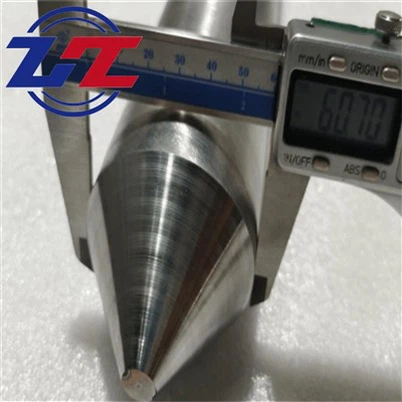
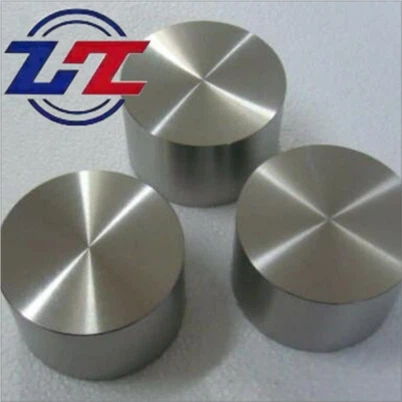
Schematic diagram of niobium as a key material in quantum computers


Niobium tantalum combination: building an efficient quantum computing platform
In quantum computers, niobium is not only widely used in quantum bits, but also interacts with other rare metals such as tantalum to form a solid foundation for quantum computing. Tantalum plays a crucial role in the interconnection of superconducting qubits and chip leads. The unique superconducting properties of tantalum are particularly suitable for specific types of qubits such as magnetic flux qubits, which can effectively ensure high-speed flow and stable transmission of quantum information.
The combined application of niobium and tantalum enables quantum computing platforms to have stronger fault tolerance and stability, supporting long-term storage and efficient processing of quantum information. The combination of these metals creates an ultra efficient quantum computing platform that can process massive amounts of data and support more complex artificial intelligence model training, greatly enhancing the practical application value of quantum computing.
The integration of quantum computing and AI: driving breakthroughs in the field of medicine
The "Origin · Wukong" quantum computer has made remarkable achievements in the auxiliary diagnosis of breast cancer with its powerful quantum computing ability. By optimizing the quantum neural network, the system is able to efficiently process massive amounts of breast image data and demonstrate astonishing performance in tasks that traditional computers cannot accomplish. For example, quantum computing platforms can complete large-scale data training in just a few seconds, while classical computers may take hours or even days to complete.
Quantum computing not only improves the efficiency of image recognition, but also enhances the accuracy of early cancer detection. According to statistics, the accuracy of AI in breast cancer screening has increased from about 80% in the traditional way to nearly 90%, and quantum computing has further optimized this process, making diagnosis more efficient and accurate.
Niobium tantalum: the cornerstone supporting future computing
In the process of gradually commercializing quantum computing technology, rare metals such as niobium and tantalum will undoubtedly play an increasingly important role. The application of niobium tantalum provides a solid foundation for the development of quantum computing and artificial intelligence, from superconducting qubits to efficient quantum computing platforms and precise medical diagnosis.
With the widespread application of quantum computing in fields such as intelligent healthcare, financial analysis, and climate simulation, the demand for rare metals will continue to grow. According to market research firm IDC, the quantum computing market is expected to achieve an average annual growth rate of over 35% in the next five years, and the global quantum computing market is projected to reach nearly $60 billion by 2030. In this process, niobium, as a key material for quantum computing, is expected to continue to rise in market demand and become an important cornerstone for supporting future technological innovation.
With the continuous breakthroughs in quantum computing and artificial intelligence technology, niobium and other rare metals are becoming a key driving force for technological progress. In the field of quantum computing, the application of niobium based superconducting quantum bits has laid the foundation for efficient and stable computation; In medical diagnosis, quantum computing provides powerful support for artificial intelligence beyond traditional computing capabilities. With the continuous expansion of industry demand, strategic metals such as niobium and tantalum will play an increasingly important role in the future development of technology.