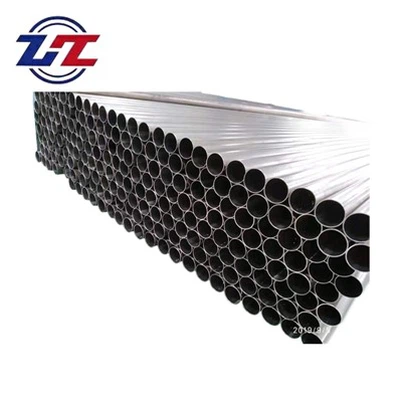
C103 Niobium Hafnium Alloy Tube
C103 niobium hafnium alloy tube is a tubular product made from a niobium-based refractory alloy. The material is commonly associated with the nominal composition Nb-10Hf-1Ti, consisting primarily of niobium with hafnium and titanium as alloying elements. It is considered for specialized engineering components where the material's high-temperature characteristics and the geometry of a hollow section are both relevant.
Unlike solid C103 bar or plate, a tube provides an internal passage within the material. This makes the tubular form a distinct option for component designs involving enclosed spaces, flow paths, or hollow structural sections. Its suitability depends not only on the alloy designation but also on the component design and intended operating conditions.
Description
Shaanxi Zhongheng Weichuang Metal Materials Co., Ltd. is one of the leading manufacturers and suppliers of C103 Niobium Hafnium Alloy Tube in China. We are committed to providing high quality customized products with competitive price. Please feel free to buy durable C103 Niobium Hafnium Alloy Tube for sale here from our factory. Also, quotation is available.
Understanding the C103 Material Designation
C103, C-103, and Nb-10Hf-1Ti are expressions buyers may encounter when searching for this alloy. They describe the material from different naming perspectives: C103 is the commonly used alloy designation, while Nb-10Hf-1Ti expresses its nominal composition.
The presence of different naming expressions does not mean that every product carrying a similar description automatically meets the same material requirements. Chemical limits, impurity restrictions, mechanical requirements, and product-form specifications may vary according to the applicable standard or purchase agreement.
For procurement purposes, buyers should identify the required grade and reference specification rather than relying on a material name alone. This is particularly important when a tube is intended for a component with defined engineering or documentation requirements.

C103-Tube-Product-Display

C103-Material-Analysis-Report-Page-1

C103-Material-Analysis-Report-Page-2

C103-Quality-and-Management-Certifications

C103-Manufacturing-Qualification-Certificate

C103-Vacuum-Melting-Production-Capability
The Role of Tubular Geometry in Component Design
The main structural distinction between C103 tube and solid stock is the hollow cross-section. A tube can provide an internal passage while retaining material around its circumference, making it relevant to designs where a solid bar would not provide the required geometry.
The relationship between the inner and outer sections also influences how the component behaves under mechanical loading and thermal exposure. Wall distribution, structural support, connection design, and the surrounding assembly all need to be considered during engineering evaluation.
A tubular product should therefore be assessed as part of the intended component rather than treated simply as a different shape of C103 stock. The material grade and the structural requirements need to be considered together.
Material Selection for Elevated-Temperature Conditions
C103 is a niobium-based refractory alloy associated with elevated-temperature engineering applications. Its use in a particular component still requires an assessment of the actual service environment. Operating temperature, exposure duration, surrounding atmosphere, thermal cycling, and mechanical loading can all influence material suitability.
The atmosphere deserves particular attention. Niobium-based alloys can be susceptible to oxidation at elevated temperatures, so high-temperature service in air or another oxidizing environment should not be treated in the same way as service under vacuum or a controlled atmosphere. Where protection is required, the coating or other protective approach needs to be evaluated for the specific application.
For this reason, a general statement that a component operates at high temperature is not enough to establish that C103 tube is suitable. The complete operating conditions and relevant design requirements should be reviewed before the material is selected.
Engineering Applications of C103 Tube
C103 is associated with specialized high-temperature engineering, including aerospace and propulsion-related applications. In these fields, tubular sections may be considered for components whose designs require a hollow structure or an internal passage.
Other potential areas of evaluation include vacuum-related equipment, thermal systems, and specialized research components. These are application contexts to be assessed rather than universal recommendations for every C103 tube.
The final choice depends on the component's function, material specification, operating atmosphere, structural requirements, and any applicable qualification or documentation requirements. A material that is appropriate for one component should not automatically be assumed suitable for another simply because both operate at elevated temperatures.
Evaluating C103 Tube for a Specific Project
Selecting C103 tube involves more than matching an alloy designation to a product description. Buyers and engineers should consider whether the specified material standard, tubular structure, and intended service conditions are consistent with the component's design.
For projects involving elevated temperatures, particular attention should be given to the surrounding atmosphere and the expected duration of exposure. For components integrated into larger assemblies, the connection method and the mechanical conditions at the interfaces should also be considered.
A clear understanding of these factors helps distinguish between a general C103 material requirement and a tube specification intended for a particular engineering application.
FAQ
Q: Q1. What should buyers verify when sourcing C103 niobium hafnium alloy tube from Shaanxi Zhongheng Weichuang Metal Materials Co., Ltd?
A: Buyers should confirm that the material designation, nominal composition, applicable product specification, and required documentation correspond to the project requirements. Where a particular standard or revision is specified, it should be identified clearly in the purchase documents.
Q: Q2. Are C103, C-103, and Nb-10Hf-1Ti interchangeable terms?
A: They are closely related expressions used to identify the same commonly recognized alloy family, but they serve different purposes. C103 is the alloy designation, while Nb-10Hf-1Ti describes its nominal composition. Neither expression alone replaces the need to confirm the applicable material specification and its requirements.
Q: Q3. Does C103 tube automatically suit vacuum and high-temperature service?
A: No. The alloy's suitability depends on the actual temperature, exposure duration, atmosphere, mechanical conditions, and component design. Vacuum service and high-temperature service should be evaluated according to the specific operating environment rather than assumed suitable based only on the C103 designation.
Q: Q4. Why is the service atmosphere important when selecting C103 tube?
A: The surrounding atmosphere can affect the oxidation behavior of niobium-based alloys, particularly at elevated temperatures. Buyers should identify whether the tube will operate in vacuum, a controlled atmosphere, or an oxidizing environment so that the material and any necessary protective measures can be evaluated appropriately.
Hot Tags: C103 Niobium Hafnium Alloy Tube, China C103 Niobium Hafnium Alloy Tube manufacturers, suppliers, factory, Niobium Hafnium Alloy C103 Tube
Send Inquiry
You Might Also Like