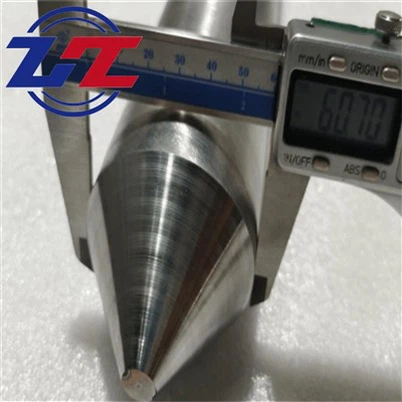
Aviation Specific Niobium Hafnium Alloy C103 Wire
Aviation specific niobium hafnium alloy C103 wire is a high-performance alloy material mainly used in the manufacturing of key components in the aviation field. This alloy is mainly composed of niobium and hafnium, and is smelted and processed through special processes. It has excellent high-temperature strength, corrosion resistance, and good electrical conductivity. C103 wire is widely used in aviation engines, high-temperature components, electronic components and other fields due to its excellent physical and chemical properties, and is one of the indispensable and important materials in the aviation industry.
Description
Shaanxi Zhongheng Weichuang Metal Materials Co., Ltd. supplies high-quality rare metals, mainly including niobium hafnium alloy 103, tungsten, tantalum, niobium, hafnium, titanium, zirconium, nickel, vanadium and alloys of conventional processed profiles such as plates, strips, coils, rods, wires, pipes, as well as deep processed products such as ships, crucibles, sputtering targets, coating targets, machined parts, high-temperature furnace insulation screens, heating elements, furnace bodies (heating furnaces, annealing furnaces), corrosion-resistant equipment, etc.
As a manufacturer, supplier, and exporter of c103, we provide high-purity, high-temperature resistant, aerospace, defense, military, and marine engineering specialized products with worry free quality and more favorable prices! Customer service is always online, so you have no worries.
Smelting process and manufacturing technology

Smelting process
Raw material pretreatment:
Mix niobium powder (hydrogenation dehydrogenation method) with alloy element powders such as hafnium and titanium to make electrodes.
Electron beam melting:
Purification in a vacuum environment to remove impurities and adjust alloy composition.
Self consumption arc melting:
Further melting is carried out to obtain ingots with uniform composition, and volatile elements (such as titanium) are added at this stage.
Craftsmanship
Plastic processing:
The ingot needs to be extruded or forged at a temperature above 1200 ℃ (extrusion ratio ≥ 4) to crush coarse grains.
Subsequent processing (rolling, drawing, etc.) should be completed below 500 ℃, and metal sleeves or inert gas protection should be used to prevent oxidation.
Surface treatment:
Oil water emulsion lubrication is required during cutting, and vacuum electron beam welding or inert gas shielded welding is used for welding.

C103 niobium hafnium alloy (Nb-10Hf-1Ti) has become an ideal material for aerospace high-temperature components due to its excellent properties of ultra-high melting point at 2468 ℃, low density of 8.57g/cm ³, and tensile strength ≥ 372MPa at 1200 ℃. Its unique hafnium titanium alloying design not only increases the recrystallization temperature, but also significantly improves room temperature toughness through solid solution strengthening, breaking through the brittle bottleneck of traditional niobium alloys.
Application area
1.Rocket propulsion system
- Nozzle extension section: The downgraded engine of the Apollo lunar module in the United States uses C103 alloy nozzles, which can withstand 1482 ℃ gas erosion and reduce weight by 25% compared to nickel based alloys.
- Attitude control engine: The thrust chamber in the satellite thruster uses C103 wire, and the ion thruster grid with a precision of ± 2 μ m is achieved through laser microfabrication.
2. High temperature components of aircraft engines
- Turbine blades: Sintavia 3D printed C103 alloy blades have a density of 99.94% and a Z-direction elongation of 32%, significantly improving the engine's thrust to weight ratio.
- Combustion chamber liner: With HfC SiC coating, the oxidation rate at 1400 ℃ is ≤ 0.5mg/cm ² · h, extending the service life by more than three times.
3. Hypersonic vehicle
- Thermal protection system: The niobium alloy technology (containing C103 component) verified by the Chinese space station experiment is used for the leading edge of the aircraft, and the compressive strength at 1700 ℃ is three times that of traditional materials.
This wire achieves a leapfrog improvement in material properties through the synergistic effect of elements. Under extreme thermodynamic conditions, its microstructure stability is significantly better than that of conventional alloy systems, which makes it capable of meeting the stringent requirements of high-temperature load-bearing components in spacecraft power systems. From the perspective of material design, its composition optimization strategy provides an important reference paradigm for the development of new refractory alloys in the future.
With the development of spacecraft towards higher specific impulse and longer lifespan, the application scenarios of this wire are extending from traditional nozzle components to cutting-edge fields such as reusable thermal protection systems. The research on its process adaptability (such as additive manufacturing compatibility) has become a hot topic in the field of materials engineering, and it is expected to further unleash its performance potential through multi-scale structural regulation in the future.
Hot Tags: aviation specific niobium hafnium alloy c103 wire, China aviation specific niobium hafnium alloy c103 wire manufacturers, suppliers, factory
Send Inquiry
You Might Also Like