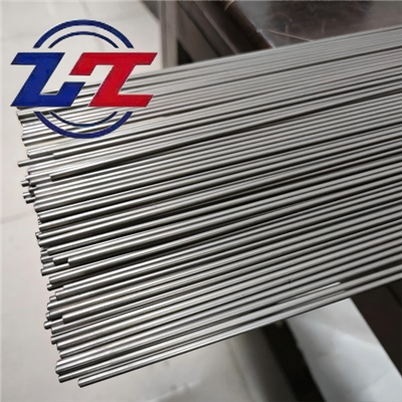
Superconducting Niobium Rod
Superconducting niobium rods, specifically referring to niobium metal rods with extremely high purity (usually required to be above 99.95%, up to 99.999%) and extremely high residual resistivity ratio (RRR) values. It is not an independent niobium alloy variety, but a basic material specially prepared and optimized to utilize the most outstanding property of metallic niobium - superconductivity. Its core value lies in its ability to enter and maintain a superconducting state when cooled to extremely low temperatures, which is the key to achieving strong magnetic fields and efficient energy transfer. It is an indispensable strategic material for modern cutting-edge science and technology.
Description
Shaanxi Zhongheng Weichuang Metal Materials Co., Ltd. supplies high-quality rare metals, mainly including niobium hafnium alloy 103, tungsten, tantalum, niobium, hafnium, titanium, zirconium, nickel, vanadium and alloys of conventional processed profiles such as plates, strips, coils, rods, wires, pipes, as well as deep processed products such as ships, crucibles, sputtering targets, coating targets, machined parts, high-temperature furnace insulation screens, heating elements, furnace bodies (heating furnaces, annealing furnaces), corrosion-resistant equipment, etc.
As a manufacturer, supplier, and exporter of niobium, we provide high-purity, high-temperature resistant, corrosion-resistant, aerospace, defense, military, and marine engineering specialized products with worry free quality and more favorable prices! Customer service is always online, so you have no worries.
Can customize various specifications of niobium rods


The core characteristics of superconducting niobium rods are first reflected in their extraordinary superconducting properties. Niobium is the single metal with the highest superconducting critical temperature (Tc) among similar elements, reaching 9.25 Kelvin (approximately -263.9 ° C). Once the temperature drops below this critical point, the DC resistance of niobium decreases to zero and exhibits complete diamagnetism, known as the Meissner effect. At the same time, niobium also has a high superconducting critical magnetic field, allowing it to maintain its superconducting state in extremely strong magnetic field environments without being destroyed.
Superconducting performance requires extremely high purity of materials, therefore superconducting grade niobium rods must have extremely high purity and consistency. Even trace amounts of interstitial elements such as oxygen, nitrogen, carbon, or substitute elements such as tantalum can severely degrade its superconducting properties. For this purpose, these niobium rods require special refining processes such as electron beam melting (EBM) or zone melting to thoroughly remove impurities and ensure extremely high chemical uniformity. Its quality is usually measured by the residual resistivity ratio (RRR) value as a key indicator. The higher the RRR, the higher the material purity, the fewer lattice defects, and the better the superconducting performance.
In addition to superconductivity and purity characteristics, high-purity niobium also exhibits good machinability. Compared with other superconducting materials such as ceramic high-temperature superconductors, high-purity niobium has excellent ductility and relatively soft texture. It can be processed into complex shapes through various processes such as forging, rolling, and drawing, and can be further processed into superconducting devices that meet the requirements using deep processing techniques such as spinning and electron beam welding.
The main and almost irreplaceable application of this material is as the core raw material for manufacturing superconducting RF cavities (SRF cavities) in particle accelerators. This type of superconducting cavity is the "heart" component in large scientific facilities such as the Large Hadron Collider (LHC) at the European Organization for Nuclear Research (CERN), synchrotron radiation sources from various countries, and free electron laser devices (such as the Shanghai Hard X-ray Free Electron Laser Device). They are precision processed from high-purity niobium rods and operate in an extremely low temperature environment provided by liquid helium, capable of accelerating particles with high efficiency while significantly reducing energy consumption.
In addition to particle accelerators, it also plays an important role in other high-end fields. In terms of superconducting magnets, although niobium titanium (NbTi) alloys are more commonly used, high-purity niobium is still used to manufacture magnet coils or system components with specific requirements. In the forefront of quantum technology, it has become a key foundational material for manufacturing superconducting quantum interference devices (SQUID) and quantum bits due to its excellent superconducting properties. In addition, in nuclear magnetic resonance (NMR) and magnetic resonance imaging (MRI) equipment, it is also used as a supplement to superconducting magnet materials to enhance the overall performance of the system or manufacture special functional components.
Superconducting niobium rod is an outstanding achievement in materials science and engineering. It fully unleashes the inherent superconducting potential of niobium metal through extreme purity control and precision machining. It is not only the "key" for humans to explore the microscopic mysteries of matter (high-energy physics) and the origin of the universe, but also playing an increasingly important role in the emerging field of quantum technology. It represents the highest pursuit of material purity, crystal structure, and surface treatment technology behind it, and is truly the foundation of a "great power heavy weapon".
Hot Tags: superconducting niobium rod, China superconducting niobium rod manufacturers, suppliers, factory, niobium, niobium magnetic, niobium ore clinkers, niobium price kg, niobium price per oz, Niobium Rod
Send Inquiry
You Might Also Like