

What are the effects of impurities on hafnium material properties?
Leave a message

Hey there! As a supplier of hafnium material, I've been getting a lot of questions lately about the effects of impurities on hafnium material properties. So, I thought I'd write this blog to share some insights on this topic.
First off, let's talk about what hafnium is. Hafnium is a shiny, silvery, ductile metal that's often used in nuclear reactors, electronic devices, and superalloys. It has some pretty amazing properties, like high melting point, good corrosion resistance, and excellent neutron absorption capabilities. But here's the thing - these properties can be significantly affected by impurities.
Effects on Physical Properties
One of the most noticeable effects of impurities on hafnium is on its physical properties. For example, impurities can change the melting point of hafnium. If there are impurities present, the melting point might be lower than the pure hafnium's melting point. This is because the impurities disrupt the regular crystal structure of hafnium, making it easier for the atoms to break free from their positions and turn into a liquid state.
Impurities can also affect the density of hafnium. Depending on the type and amount of impurities, the density might either increase or decrease. For instance, if the impurities are heavier than hafnium, the overall density of the hafnium material will go up. On the other hand, if the impurities are lighter, the density will drop.
Impact on Mechanical Properties
When it comes to mechanical properties, impurities can have a big impact. They can make the hafnium material more brittle. Imagine you have a piece of pure hafnium that's relatively ductile and can be bent or shaped without breaking easily. But if there are impurities in it, those impurities can act as stress concentrators. When you try to bend or deform the material, the stress builds up around the impurities, and the material is more likely to crack or break.
The strength of hafnium can also be affected. In some cases, a small amount of certain impurities might actually increase the strength of the material. This is called solid - solution strengthening. The impurity atoms fit into the crystal lattice of hafnium and make it harder for the dislocations (defects in the crystal structure) to move. However, if there's too much of the impurity, it can lead to a decrease in strength and an increase in brittleness.
Influence on Chemical Properties
Chemical properties are also at stake when it comes to impurities in hafnium. Hafnium is known for its good corrosion resistance. But impurities can change this. Some impurities might react with the surrounding environment more readily than hafnium itself. For example, if there are impurities that are more reactive to oxygen, they can form oxides on the surface of the hafnium material. These oxides might not be as protective as the natural oxide layer that forms on pure hafnium, and as a result, the material becomes more susceptible to corrosion.
Moreover, impurities can affect the reactivity of hafnium in chemical reactions. If you're using hafnium in a chemical process, the presence of impurities can change the reaction rate or even the products of the reaction. This can be a real headache in industries where precise chemical reactions are required.
Types of Common Impurities
Now, let's talk about some of the common impurities found in hafnium. One of the most common ones is zirconium. Zirconium and hafnium are very similar chemically and are often found together in nature. Even after purification processes, it's difficult to completely separate them. Zirconium impurities can have a relatively small effect on hafnium properties, but in some high - precision applications, even a small amount of zirconium can matter.
Other common impurities include iron, nickel, and titanium. Iron impurities can increase the magnetic properties of hafnium, which might not be desirable in some applications. Nickel impurities can affect the corrosion resistance and the mechanical properties of hafnium. Titanium impurities can also influence the crystal structure and the reactivity of hafnium.
How We Deal with Impurities
As a hafnium material supplier, we take impurities very seriously. We use advanced purification techniques to reduce the amount of impurities in our hafnium products. For example, we use processes like electron beam melting and vacuum arc remelting. These processes help to remove a large portion of the impurities by taking advantage of the different melting points and vapor pressures of hafnium and the impurities.
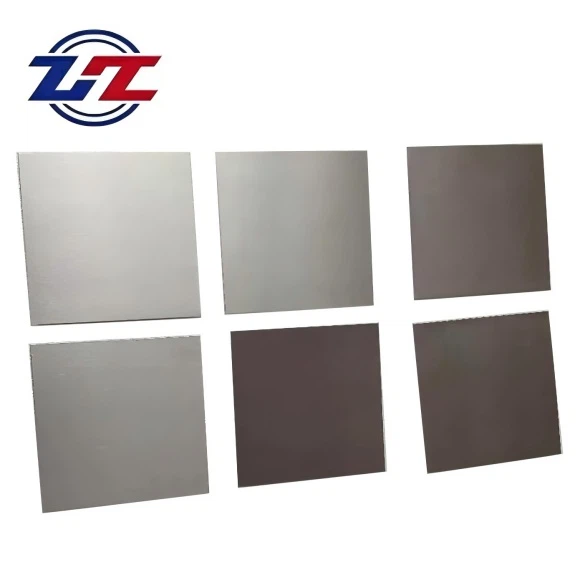

We also conduct strict quality control tests on our products. We use techniques like spectroscopy to analyze the chemical composition of the hafnium material and make sure that the impurity levels are within the acceptable range. This way, we can ensure that our customers get high - quality hafnium material with consistent properties.
Applications and the Role of Impurities
In different applications, the tolerance for impurities in hafnium varies. In nuclear reactors, for example, the purity requirements are extremely high. Even a small amount of impurities can affect the neutron absorption properties of hafnium, which is crucial for the safe and efficient operation of the reactor.
In the aerospace industry, where hafnium is used in superalloys, the impurities need to be carefully controlled. The mechanical properties of the superalloys are very important, and impurities can have a significant impact on them. For instance, if the impurities make the superalloy more brittle, it can lead to structural failures in aircraft components.
On the other hand, in some less - critical applications, a slightly higher level of impurities might be acceptable. For example, in some electronic devices where hafnium is used as a minor component, the requirements for purity might not be as strict.
Related Products
If you're interested in other metal products related to hafnium, we also offer some great options. For example, we have Niobium Strip. Niobium strip has its own unique properties and is used in a variety of applications, such as in the electronics and aerospace industries.
We also have Nickel Pipe. Nickel pipes are known for their good corrosion resistance and are used in many chemical and industrial processes.
And if you're looking for an alloy product, we offer Corrosion and oxidation resistant niobium hafnium alloy C103 thin plate. This alloy combines the properties of niobium and hafnium and is highly resistant to corrosion and oxidation.
Conclusion
In conclusion, impurities can have a wide range of effects on hafnium material properties, including physical, mechanical, and chemical properties. As a hafnium material supplier, we're committed to providing high - quality hafnium products with low impurity levels. Whether you're in the nuclear, aerospace, or electronics industry, we can offer you the right hafnium material for your needs.
If you're interested in purchasing hafnium material or any of our other related products, feel free to reach out to us. We're always ready to have a chat about your requirements and help you find the best solution.
References
- Smith, J. (2018). "The Effects of Impurities on Metal Properties". Metal Science Journal.
- Johnson, R. (2019). "Advanced Purification Techniques for Hafnium". Materials Engineering Review.
- Brown, A. (2020). "Application - Specific Impurity Requirements for Hafnium". Aerospace Materials Research.


