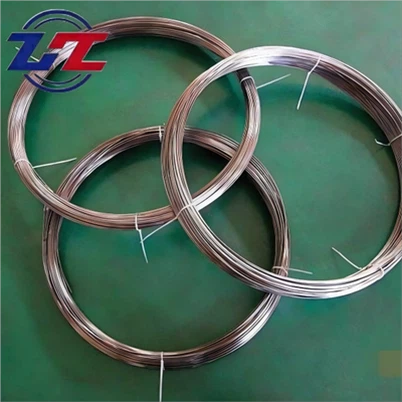
Hafnium Foil For Aerospace Applications
Hafnium foil used in aerospace is a key high-performance material, which is applied in extreme environments due to its extremely high melting point, excellent high temperature and oxidation resistance, and unique "oxygen absorber" effect. It is mainly used in the thermal barrier coating system of aircraft engine turbine blades, which significantly enhances the anti-oxidation protection layer and improves engine efficiency by removing harmful impurities; It is also used as a throat liner for rocket engine nozzles, ensuring stable thrust with its excellent erosion resistance, and is an important guarantee for the reliable operation of cutting-edge equipment.
Description
Shaanxi Zhongheng Weichuang Metal Materials Co., Ltd. supplies high-quality rare metals, mainly including niobium hafnium alloy 103, tungsten, tantalum, niobium, hafnium, titanium, zirconium, nickel, vanadium and alloys of conventional processed profiles such as plates, strips, coils, rods, wires, pipes, as well as deep processed products such as ships, crucibles, sputtering targets, coating targets, machined parts, high-temperature furnace insulation screens, heating elements, furnace bodies (heating furnaces, annealing furnaces), corrosion-resistant equipment, etc.
As a manufacturer, supplier, and exporter of hafnium materials, Shaanxi Zhongheng Weichuang Metal Materials Co., Ltd. provides high-purity, high-temperature resistant, corrosion-resistant, aerospace, defense, military, and marine engineering specialized products with worry free quality and more favorable prices! Customer service is always online, so you have no worries.


The hafnium foil used in the aerospace industry has high precision requirements for its material properties compared to ordinary industrial products due to its extremely harsh usage environment. These requirements mainly focus on the following four aspects:
Firstly, the extremely high material purity is the fundamental guarantee for the performance of hafnium foil. Any trace impurity element can become a weak link at high temperatures, seriously deteriorating its antioxidant and high-temperature stability, and even inducing early failure. Therefore, the purity of aerospace grade hafnium foil must usually be strictly controlled above 99.9% (3N) to ensure the predictability and reliability of material behavior.
Secondly, precise geometric shape control is crucial. As an intermediate or prefabricated layer in thermal barrier coating systems, the thickness of hafnium foil is typically strictly designed at the micrometer level. This not only requires minimal overall thickness deviation, but also extraordinary thickness uniformity across the entire plane. Any local fluctuations may become stress concentration points, affecting the overall adhesion and service life of the coating.
Furthermore, the excellent microstructure determines its core functionality. Only by precisely controlling the grain size and morphology and minimizing internal defects can its mechanical strength at high temperatures and chemical activity efficiency as an "oxygen absorber" be optimized. A uniform and fine equiaxed crystal structure is usually considered an ideal state, which is directly related to the comprehensive performance of materials in extreme thermal mechanical chemical coupling environments.
Finally, impeccable surface quality is a prerequisite for achieving a strong bond with the substrate. The surface of the foil material must be in a highly clean state, free from any pollutants such as oil, dust, or fingerprints, and the pre generated natural oxide layer must be effectively removed. A pristine metal surface is crucial for ensuring the subsequent deposition of coatings or the formation of high-strength metallurgical bonds with the substrate material.
The core application of hafnium foil in aerospace is primarily reflected in thermal barrier coating systems (TBC) for aircraft and rocket engines. Modern ultra-high temperature alloy components need to operate in extreme environments beyond their melting points, and their reliability highly depends on a protective layer of alumina film (TGO). Hafnium foil, as an efficient "oxygen absorber" (Getter), is prepared as an intermediate layer or thin film, which can preferentially remove harmful impurities such as oxygen and sulfur in the alloy, thereby promoting the formation of a denser and more stable aluminum oxide protective layer. This mechanism significantly enhances the oxidation resistance, service life, and adhesion of thermal barrier coatings, ultimately enabling engines to operate safely at higher temperatures and becoming a key technology for improving thrust and fuel efficiency.
Another key application is the nozzle throat lining of solid rocket engines. This component directly withstands severe erosion from high-temperature, high-speed corrosive gases, and its shape stability directly determines whether the thrust can be smooth. Hafnium foil, with its extremely high melting point (2233 ° C) and high-temperature strength, is used in composite nozzle structures or as a corrosion-resistant coating. During the working process, a protective layer of hafnium dioxide (HfO ₂) with a higher melting point (about 2900 ° C) is generated on the surface of hafnium, greatly enhancing the material's resistance to erosion and ensuring the reliable performance and structural integrity of rocket engines during brief but extremely harsh working processes.
Hafnium foil used in aerospace is not an ordinary metal material, but a model that embodies the wisdom of high-precision materials science and engineering. Although it exists in the simple form of "foil", it plays an irreplaceable role in the "heart" and "throat" of aircraft engines and rocket engines. From the high-temperature protective coating that protects turbine blades to the erosion resistant throat lining that strengthens rocket nozzles, hafnium foil silently provides a solid guarantee for human exploration of the boundaries of the sky with its excellent high-temperature resistance, unique oxygen absorber function, and reliable erosion resistance. With the continuous advancement of aerospace technology towards higher, faster, and farther directions, the demand for key materials such as high-performance hafnium foil will inevitably increase day by day, and its technological progress will continue to drive the entire industry towards new heights.
Hot Tags: hafnium foil for aerospace applications, China hafnium foil for aerospace applications manufacturers, suppliers, factory
Send Inquiry
You Might Also Like