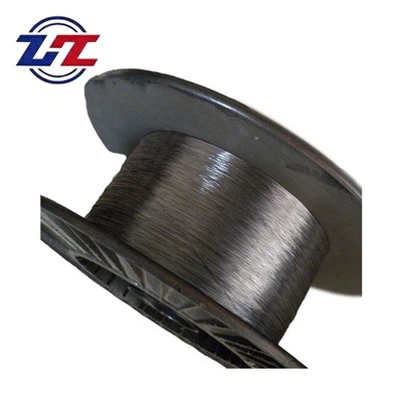
Anti Oxidation Hafnium Wire
Anti oxidation hafnium wire is a special hafnium wire material that significantly enhances its high-temperature oxidation resistance through surface coating or alloying technology. Its core goal is to break through the limitation of pure hafnium being easily oxidized in high temperature air (significant oxidation begins at around 400 ° C), enabling it to work stably for a long time in oxidation environments above 1200 ° C, thereby expanding the application boundaries of hafnium wire in extreme high temperature fields.
Description
The production process and specifications of anti-oxidation hafnium wire are precise and strict, aiming to ensure its reliability and stability in high-temperature oxidation environments.
Manufacturing process
1. Preparation of high-purity hafnium matrix
- Purification of hafnium raw materials to ≥ 99.8% by electron beam melting (EBM) or vacuum arc melting (VAR), with strict control of impurities such as oxygen (O<600ppm) and nitrogen (N<100ppm).
- Adding alloying elements such as tantalum and carbon to form alloys such as Hf-Ta-C enhances the high-temperature strength of the matrix.
2. Surface coating treatment
- Chemical Vapor Deposition (CVD): A silicide coating (such as HfSi ₂, MoSi ₂) is formed on the surface of hafnium wire, with a coating thickness typically ranging from 20-50 μ m, raising the oxidation resistance temperature to 1200-1600 ° C.
- Slurry sintering method: Silicon/aluminum slurry is coated on the surface of hafnium wire and sintered at high temperature in an inert atmosphere to form a dense coating.
- Laser surface alloying: Local areas are injected with silicon and aluminum elements through laser cladding to form a gradient alloy layer.
3. Heat treatment and diffusion strengthening
- Perform diffusion annealing in a vacuum environment of 1200-1400 ° C to enhance the adhesion between the coating and the substrate and avoid high-temperature peeling.
- Optimize coating structure through aging treatment to enhance thermal shock resistance.
4. Precision drawing and forming
- After coating, the hafnium wire is cold drawn multiple times to the target diameter (such as 0.1-3.0mm), with vacuum annealing (800-900 ° C) interspersed in between to relieve stress.
- Finally, electrolytic polishing is performed to reduce surface roughness (Ra<0.8 μ m).


Specifications
- The specification parameters of anti-oxidation hafnium wire cover multiple key indicators to meet the demanding requirements of extreme high temperature environments. Its diameter range is usually from 0.1 to 3.0 millimeters, with ultra-fine wire specifications reaching up to 0.05 millimeters to meet the precision assembly needs of different application scenarios.
- The coating thickness is the core parameter for ensuring performance, generally controlled within the range of 20 to 50 microns. This type of coating mainly uses silicide systems (such as HfSi ₂, MoSi ₂, etc.) to form a dense protective layer through processes such as chemical vapor deposition. In terms of antioxidant performance, the material can work stably in an air environment of 1200 to 1600 degrees Celsius for a long time, and can withstand temperatures up to 1800 degrees Celsius in the short term.
- In terms of mechanical properties, the anti-oxidation hafnium wire has a tensile strength of not less than 500 megapascals at room temperature and can maintain a strength characteristic of over 200 megapascals at a high temperature of 1200 degrees Celsius. After electrolytic polishing treatment, the surface roughness can be controlled within Ra<0.8 microns, ensuring that the surface quality meets the requirements of high-temperature application.
Quality Control and Testing
- Coating adhesion test: Check whether the coating peels off through thermal shock testing (rapid cooling and heating cycles at room temperature -1200 ° C>100 times).
- High temperature oxidation test: Static oxidation in 1200 ° C air for 100 hours, with an oxidation weight gain of<1 mg/cm ².
- Non destructive testing: X-ray testing for coating porosity, eddy current testing for substrate defects.
Composition analysis: GDMS detects hafnium purity, EPMA analyzes coating element distribution.
Summary of process characteristics
- Collaborative design of coating and substrate: breaking through the bottleneck of oxidation resistance through the dual technology of alloying and coating;
- Full process atmosphere protection: from melting to coating treatment, it is carried out under vacuum or inert atmosphere to prevent oxidation;
- Precision dimension control: The drawing process ensures a diameter tolerance of ≤± 0.01 mm, meeting the assembly requirements of high-temperature components;
- Strict performance verification: requires certification through aerospace standards (such as AMS 7898) or nuclear energy standards (such as ASTM B776)
Hafnium wire used in the nuclear industry achieves the unity of neutron absorption, corrosion resistance, and structural strength through precise composition control, plastic processing, and radiation adaptability design, becoming an indispensable strategic material for reactor control and safety protection. Its performance is directly related to the operational safety and economy of nuclear power plants, and is an important guarantee for the autonomy of nuclear energy technology.
Hot Tags: anti oxidation hafnium wire, China anti oxidation hafnium wire manufacturers, suppliers, factory, Hafnium Wire
Send Inquiry
You Might Also Like