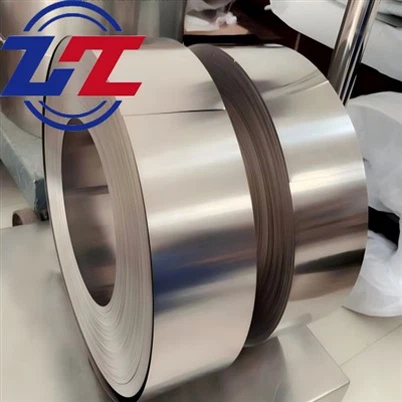
How Nb-Hf Alloy C103 Is Manufactured
Leave a message
Real Manufacturing Process of Niobium Hafnium Alloy C103 from the Source
Nb Hf Alloy C103 is not a material that can be quickly replicated in high-temperature propulsion systems, thermal protection structures, and extreme operating conditions. For technical procurement, whether one truly understands the manufacturing method of C103 alloy often determines the stability of later performance, reliability of delivery time, and project risks.
This article does not start from the application, but returns to the manufacturing site to dismantle the complete process logic of niobium hafnium alloy C103 from metal raw materials to finished product delivery.

Where to start with alloys: the logic of selecting metal raw materials
The standard system for niobium hafnium alloy C103 is based on three metals:
- Niobium as the matrix
- Hafnium provides high-temperature strengthening
- Trace titanium for tissue stabilization
In actual production, manufacturers are more concerned about "invisible indicators":
- Oxygen, nitrogen, and hydrogen content
- Consistency of raw material batches
- Surface contamination and adsorption risk
This stage does not directly determine the performance values, but rather determines whether all subsequent processes are controllable.
Why does C103 have to melt in high vacuum

Unlike conventional alloys, C103 is extremely sensitive to gases.
Therefore, its core melting steps always revolve around one keyword: vacuum environment.
In mature production systems, C103 typically uses:
- Electron beam directed melting
- Multiple remelting to enhance internal consistency
The essence of this approach is not just "melting the metal", but:
- Continuously reducing gas content during the melting process
- Allow alloy elements to fully diffuse during the liquid phase
- Reduce the impact of non-metallic inclusions on high-temperature performance
This is also why the performance differences of C103 from different suppliers are still significant under the same chemical composition.
From cast state to machinable state: ingot is not the end point
The C103 alloy after melting is still in a "cast structure" and cannot be directly processed and used.
Therefore, manufacturers will conduct:
- High temperature homogenization treatment
- Long term insulation in vacuum or inert atmosphere
The goal of this step is very clear:
- Let the alloy stabilize internally before entering the plastic deformation stage.
Forming control under high temperature conditions
The processing window of niobium hafnium alloy C103 is narrow, which determines that it is not suitable for extensive production.
Depending on the product form, the following may be used:
- Forging
- Rolling
- Extrude
At this stage, what is truly tested is:
- Temperature control capability
- Transformation rhythm
- Experience in intermediate process connection
Hot processing is not about 'making the size', but about laying the foundation for the final performance.
Why does annealing repeatedly occur in the C103 process
Annealing is not a one-time process throughout the entire manufacturing process.
Whenever a material undergoes a certain degree of deformation, it is necessary to:
- Stress release in a controlled atmosphere
- Restore material plasticity
- Prevent the risk of subsequent cracking
For plates, rods, and pipes, the number of annealing cycles often directly affects the yield rate.
Where does dimensional accuracy come from: the role of cold working
Cold working is only introduced when higher requirements are placed on size, straightness, or surface condition in application scenarios.
But on C103:
- Cold processing has never been the protagonist
- It must be combined with multiple heat treatments
This is also why the production pace of C103 is significantly slower than that of ordinary industrial alloys.
Final heat treatment: not a 'standard action', but a customized step
In the finished product stage, there is no single standard answer for heat treatment.
Manufacturers will base their decisions on:
- Operating Temperature
- Force bearing method
- Customer Technical Conditions
Fine tune the heat treatment system to balance strength, ductility, and organizational stability.
The testing process reflects the depth of manufacturing
A truly mature C103 production system does not rely solely on testing processes.
Usually includes:
- Chemical Composition and Gas Analysis
- Observation of microstructure
- Mechanical performance verification
- Size and appearance confirmation
These data are often important basis for engineering procurement decisions.

ISO 14001 Certification

ISO 9001 Certification

Military Standards
The final step before delivery
Due to the sensitivity of niobium hafnium alloys to the environment, finished products are usually made using:
- Vacuum or inert gas packaging
- Anti oxidation and anti-collision design
Ensure that the material status does not change before delivery.
A practical suggestion for the purchasing side
If only looking at the brand, C103 is the same C103;
But if we look at the manufacturing path, C103 under different process systems is not equivalent.
For those who are currently searching
C103 alloy manufacturer / Nb-Hf alloy factory / C103 alloy supplier in China
For the purchasing party, understanding its manufacturing logic is itself a risk control measure.